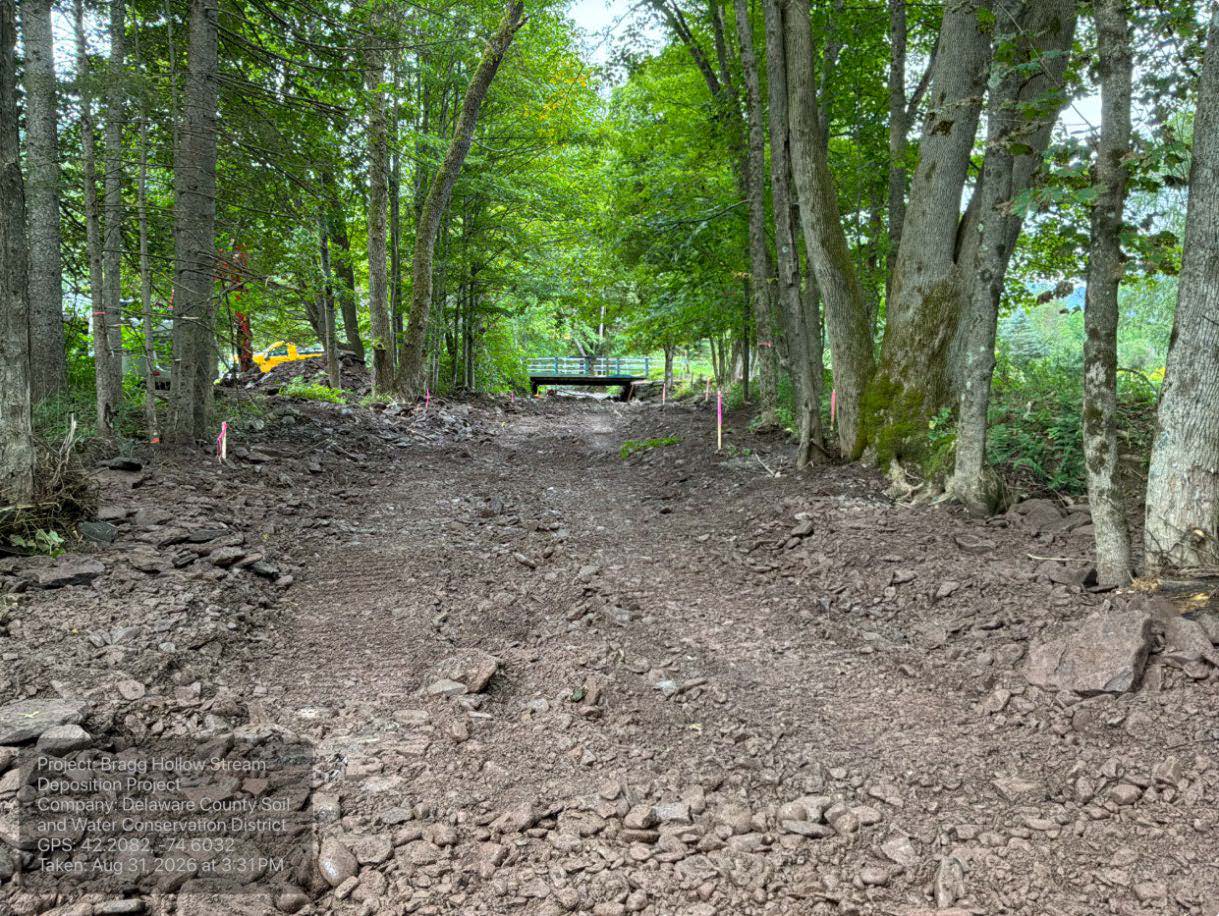
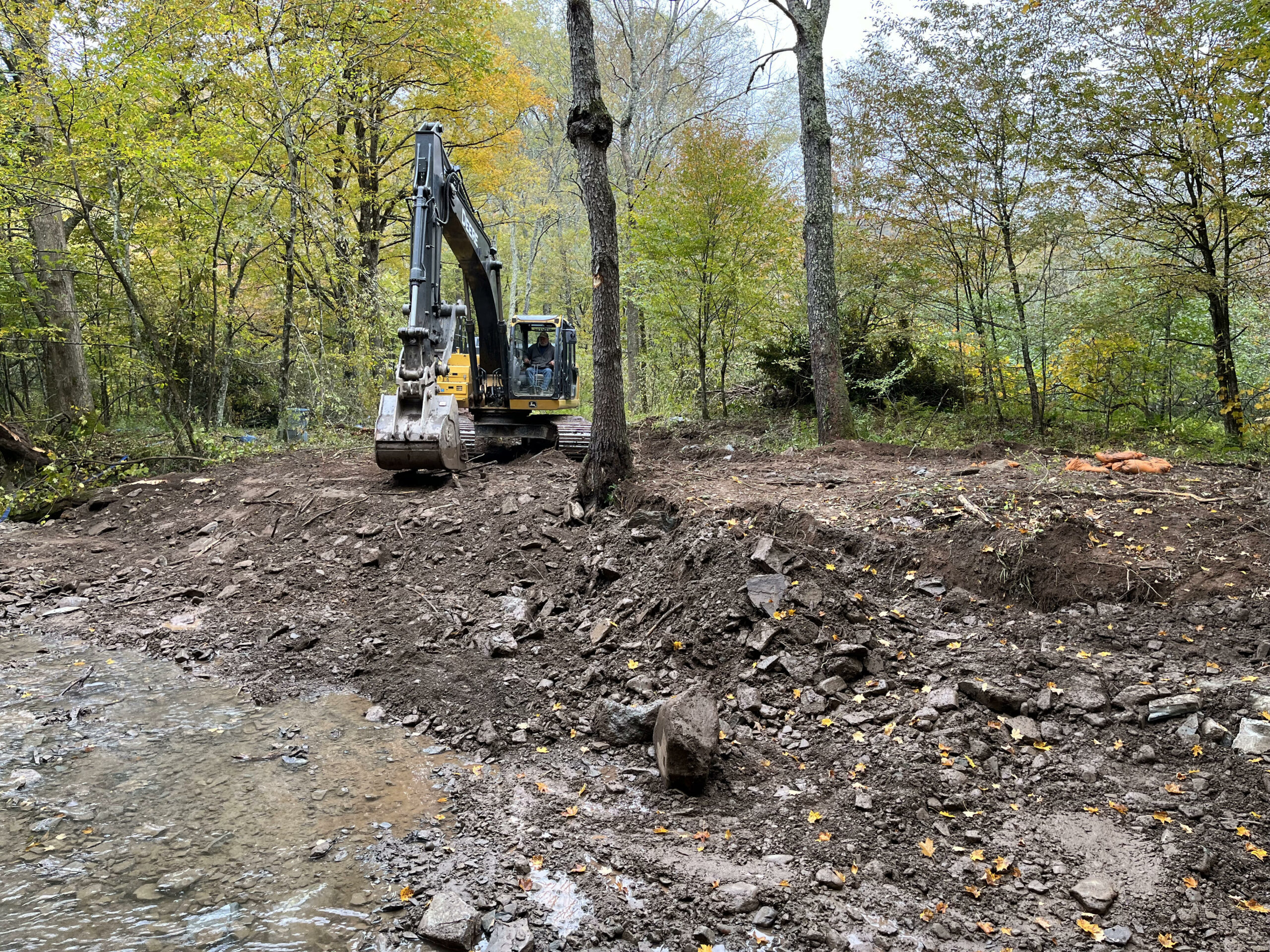
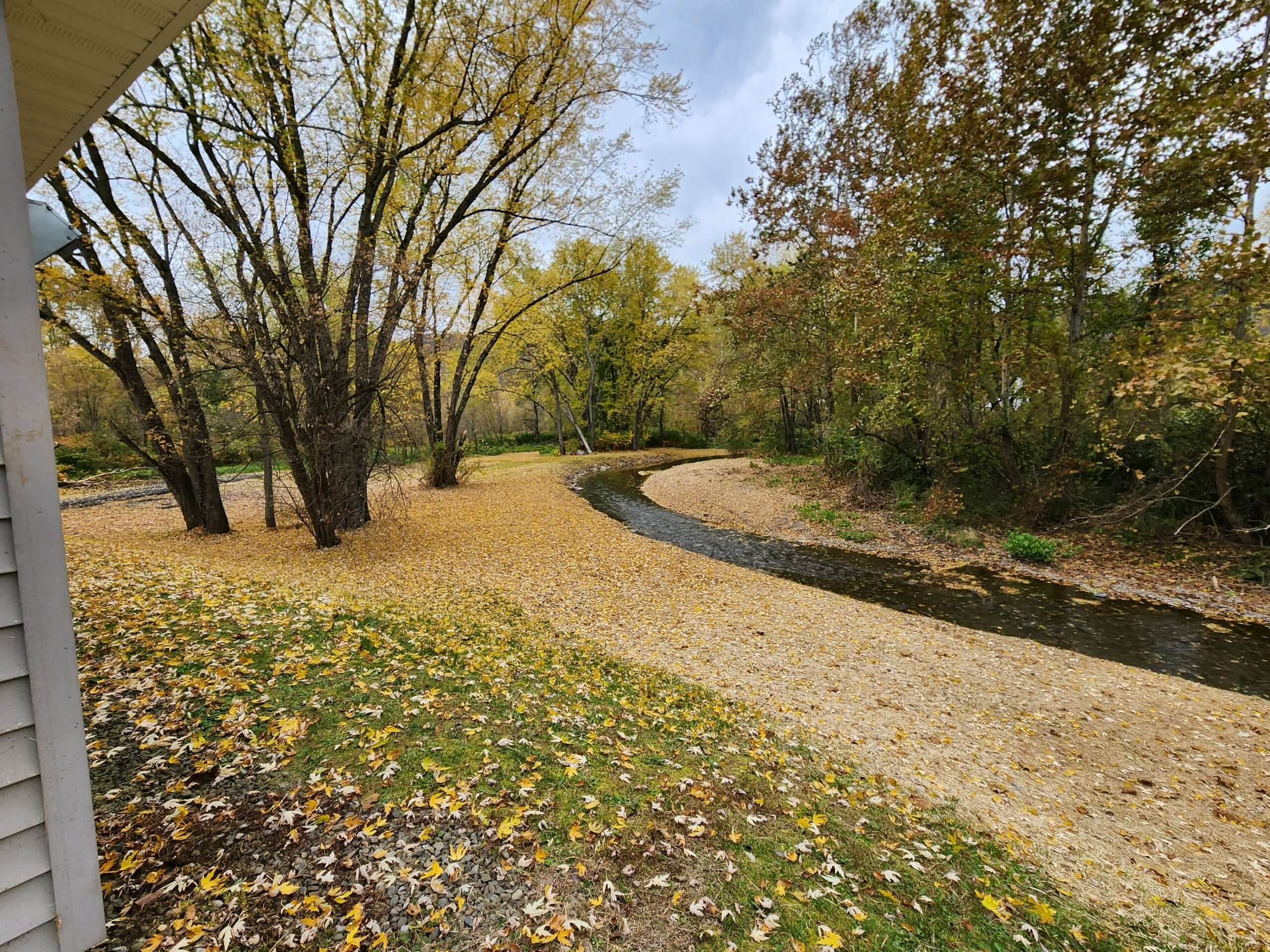
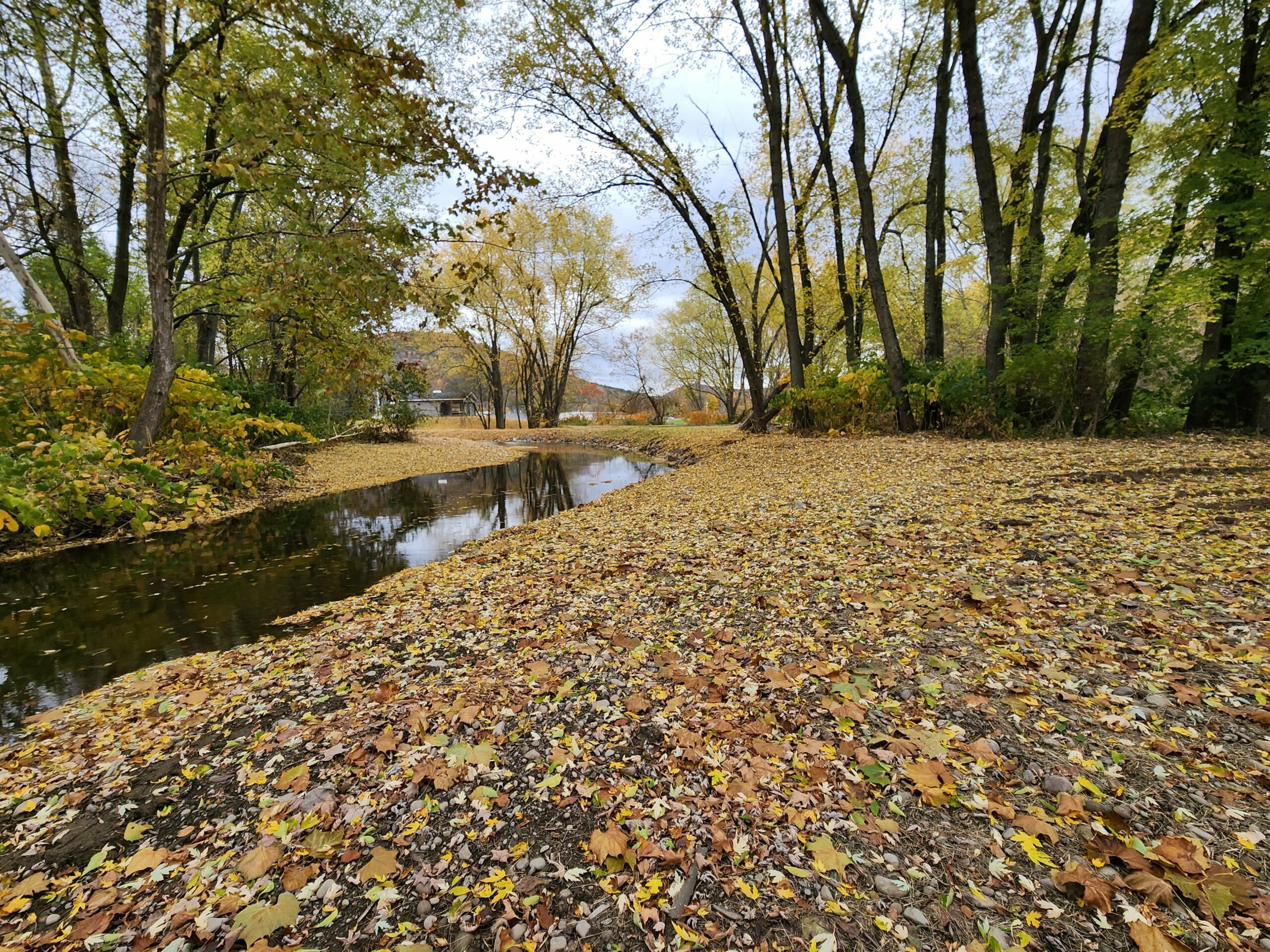
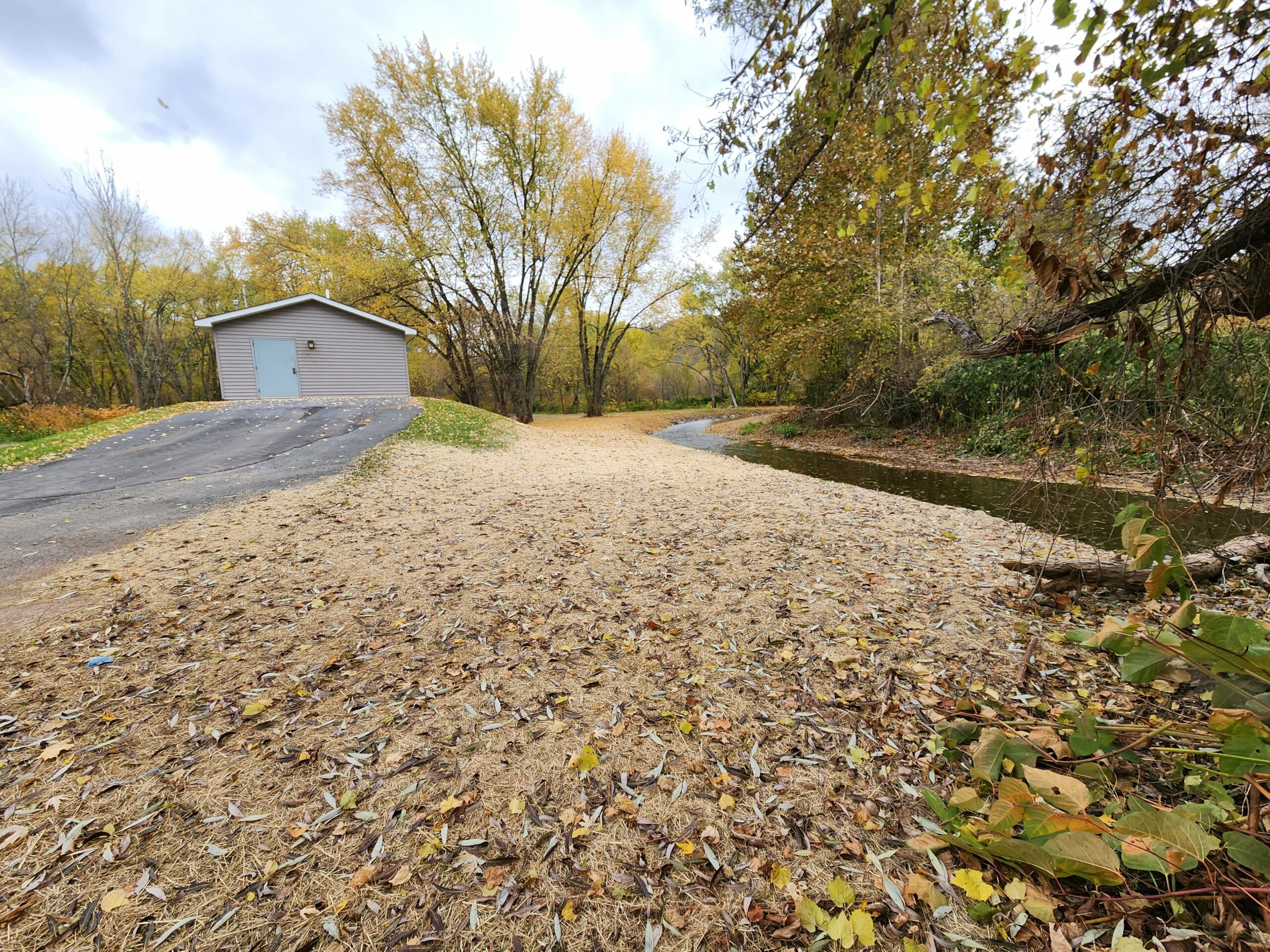
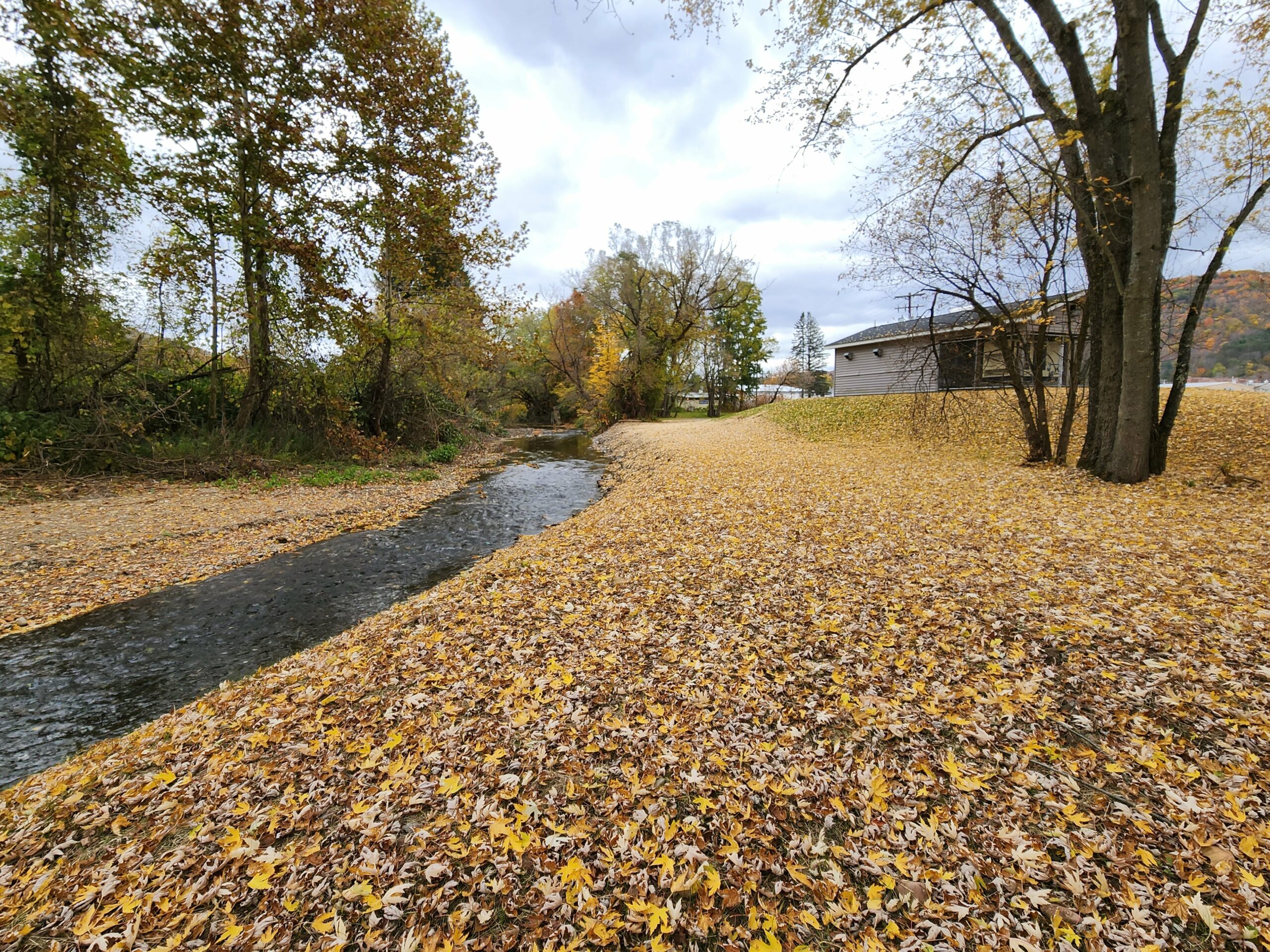
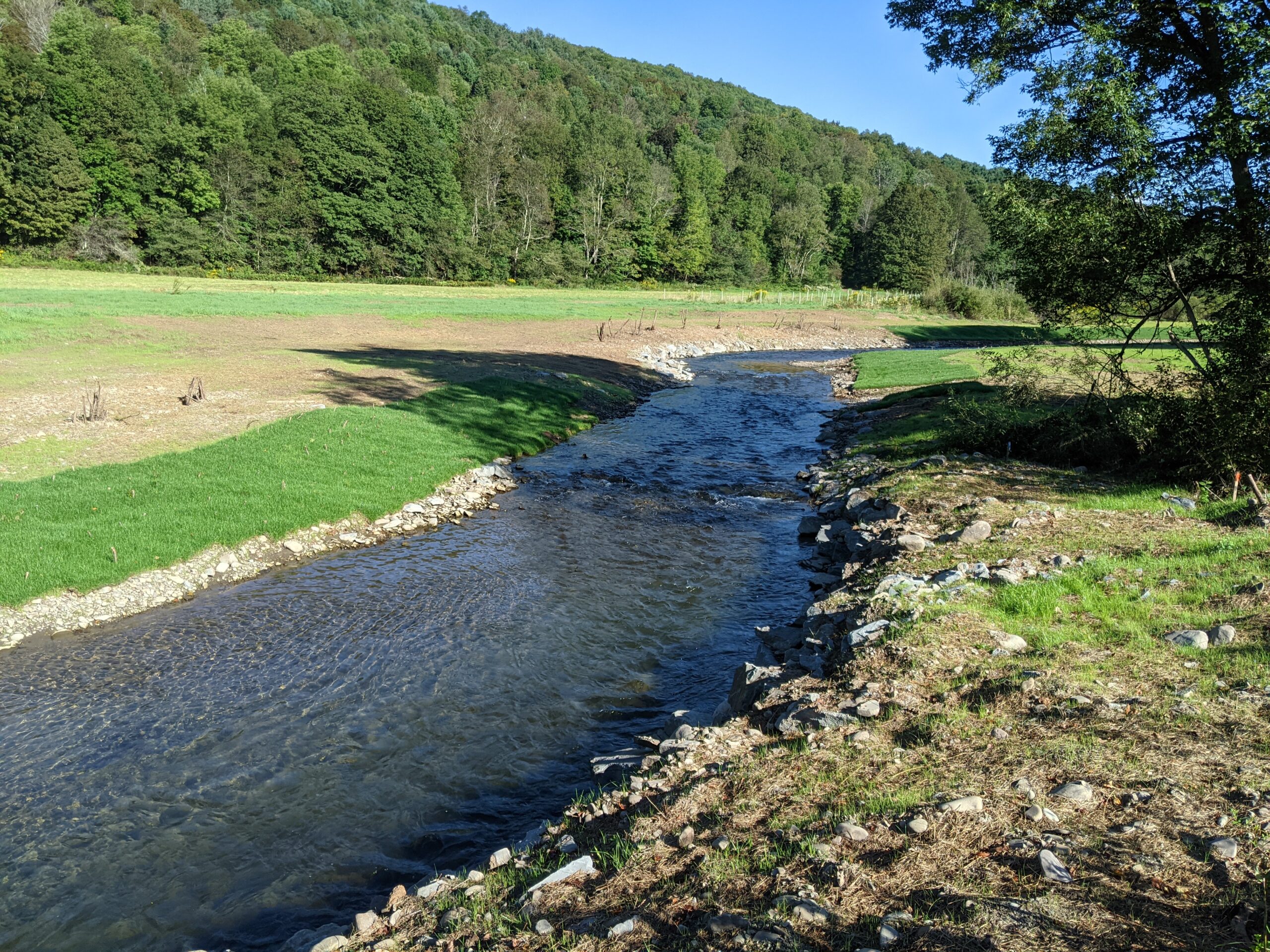
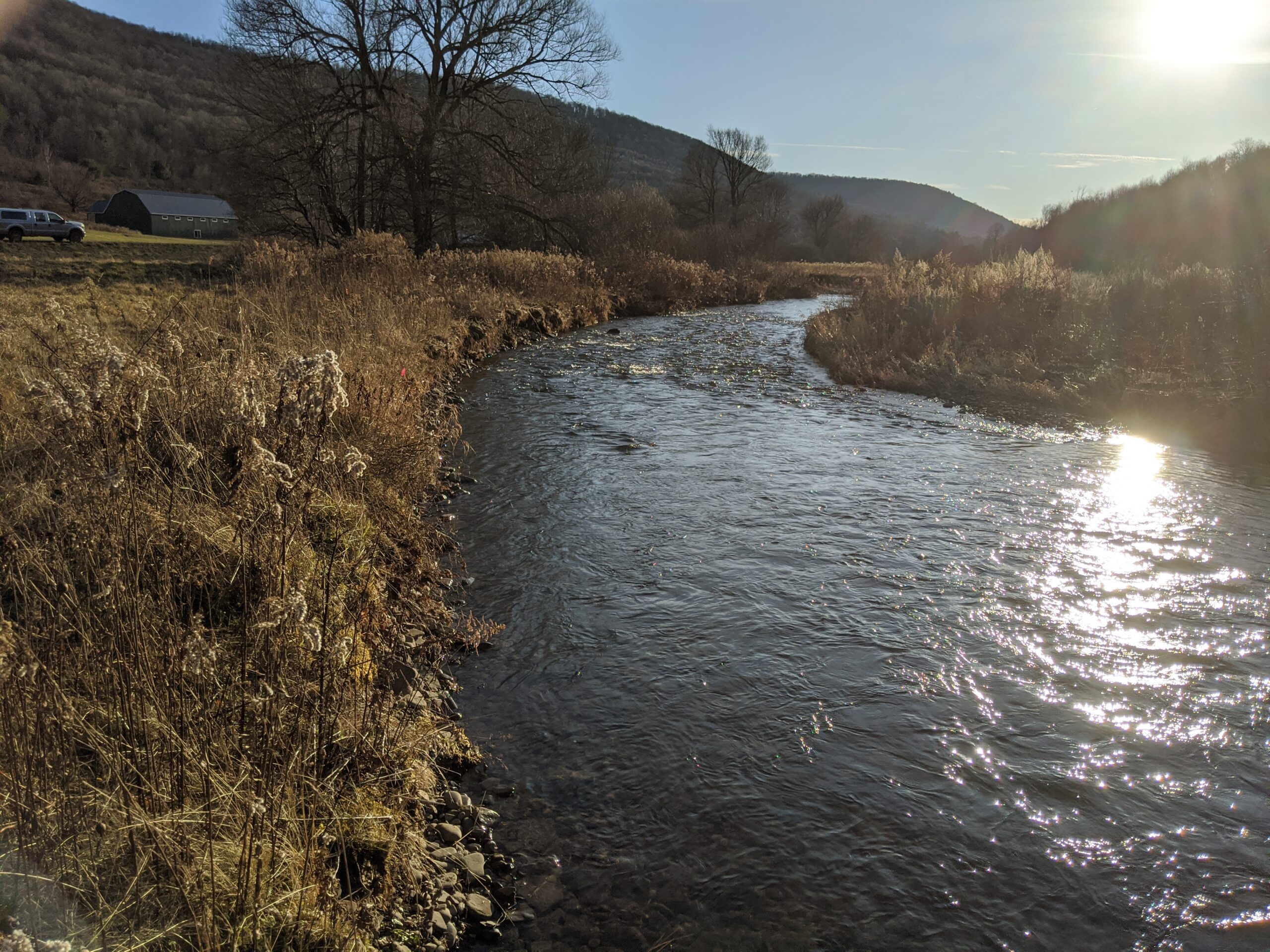
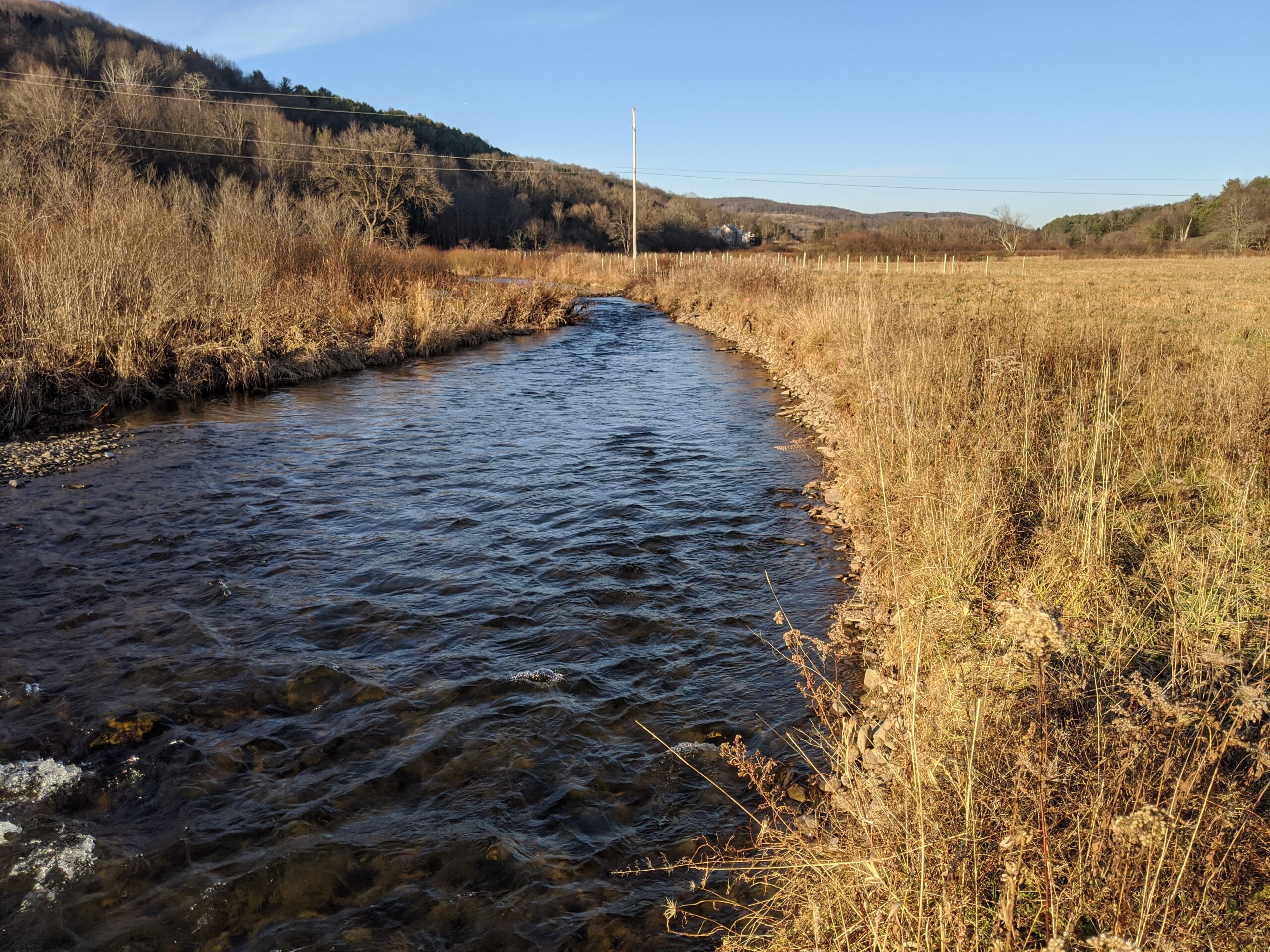
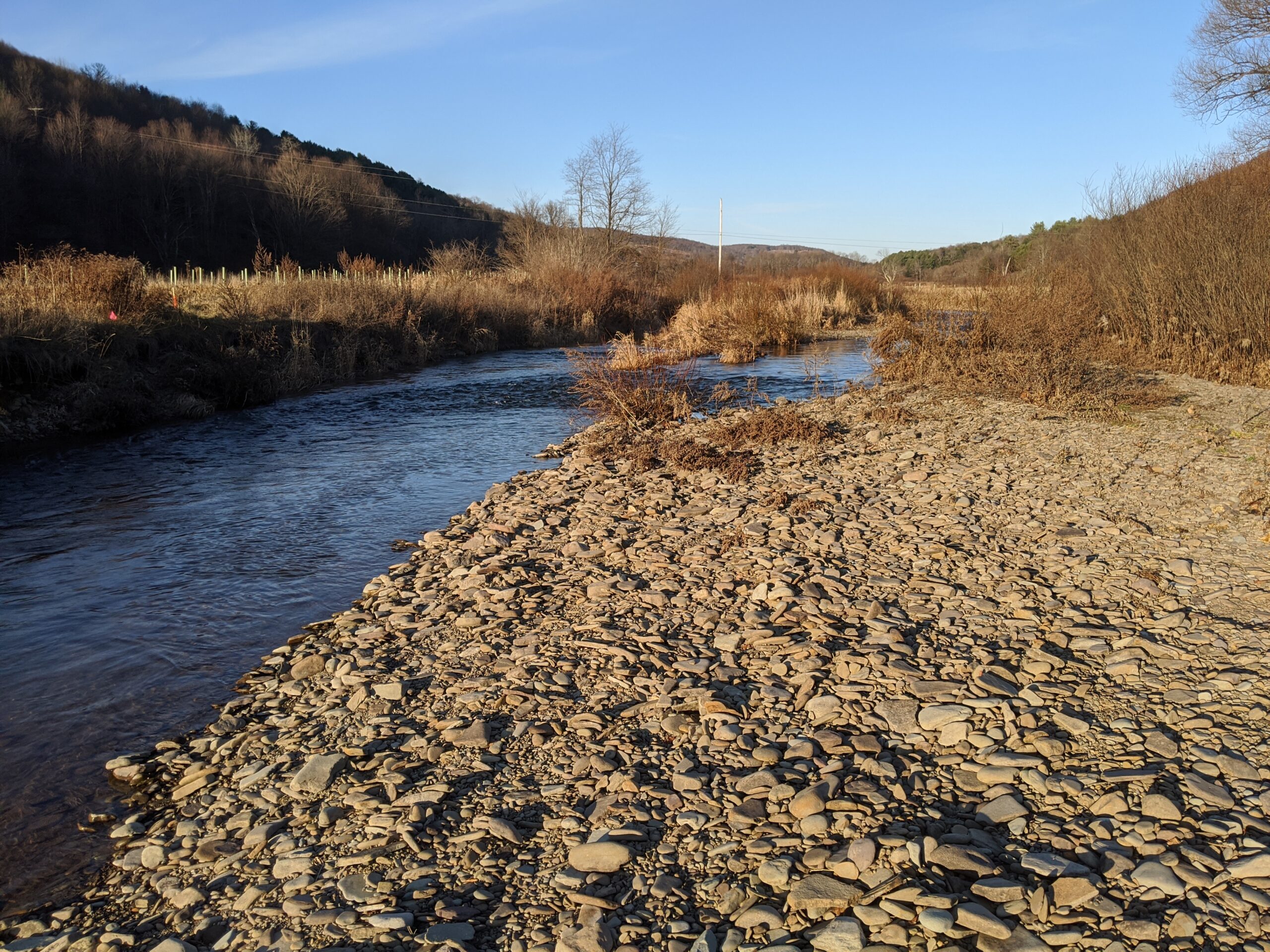
The purpose of the project is to remove sediment deposition in order to properly dimension the channel and remove excess sediment.
Delaware County Soil & Water Conservation District (DCSWCD) performed a topographic survey of the area during Summer 2025 that included the Bragg Hollow thalweg, stream channel, streambank, driveway, and buildings, and any other significant topographic features. This survey picked up all the existing topographic features and was performed using a total station instrument. The data collected was downloaded into AutoCAD and contour maps were created for use in the engineering design.
The project design stream length was 190 linear feet of construction on the Tremper Kill. The proposed stream work consisted of the following:
• Removal of gravel deposition to establish appropriate channel dimensions.
• Limits of Disturbance: 0.5 ac
Listed below are the project design goals:
1. Improve sediment transport competency through project area.
2. Improve trout and aquatic macroinvertebrate habitat within the project area.
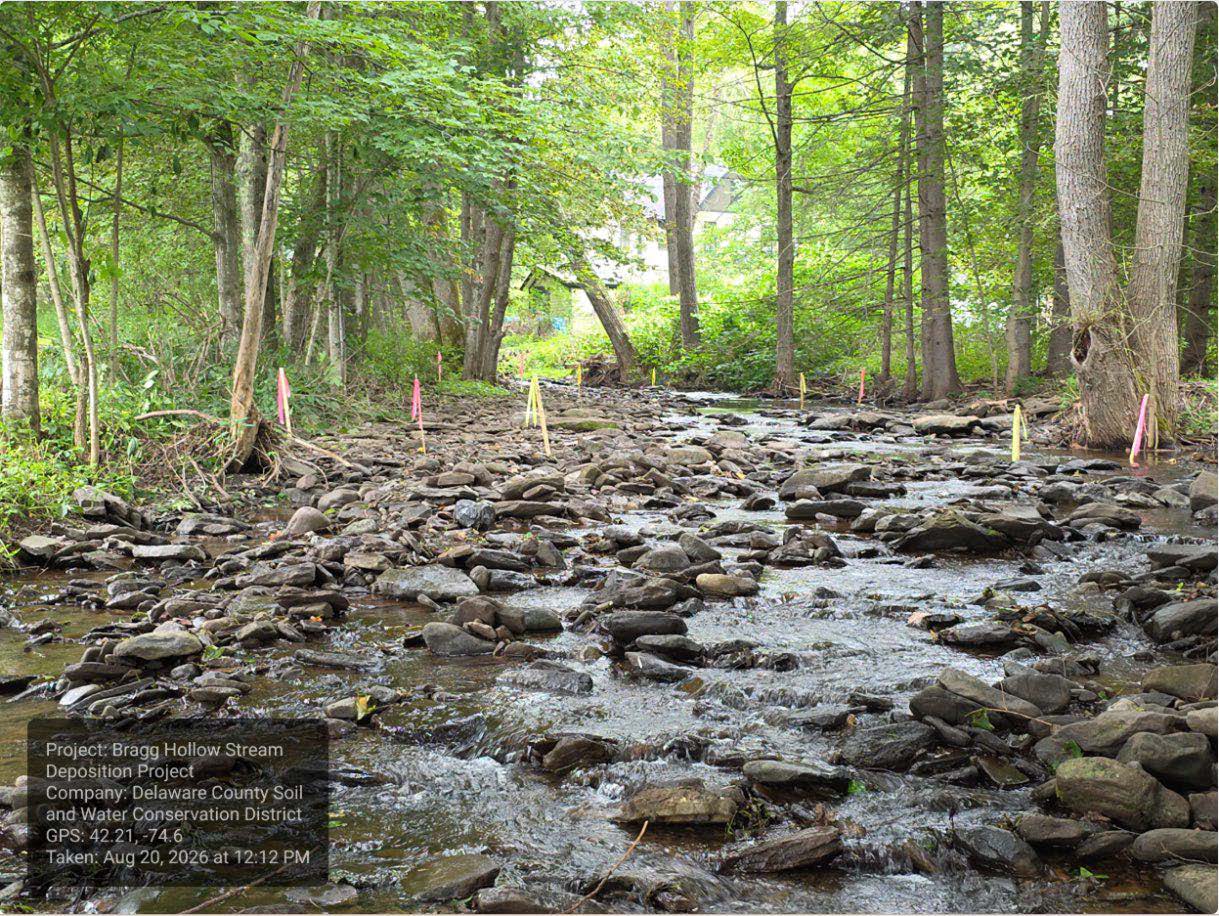
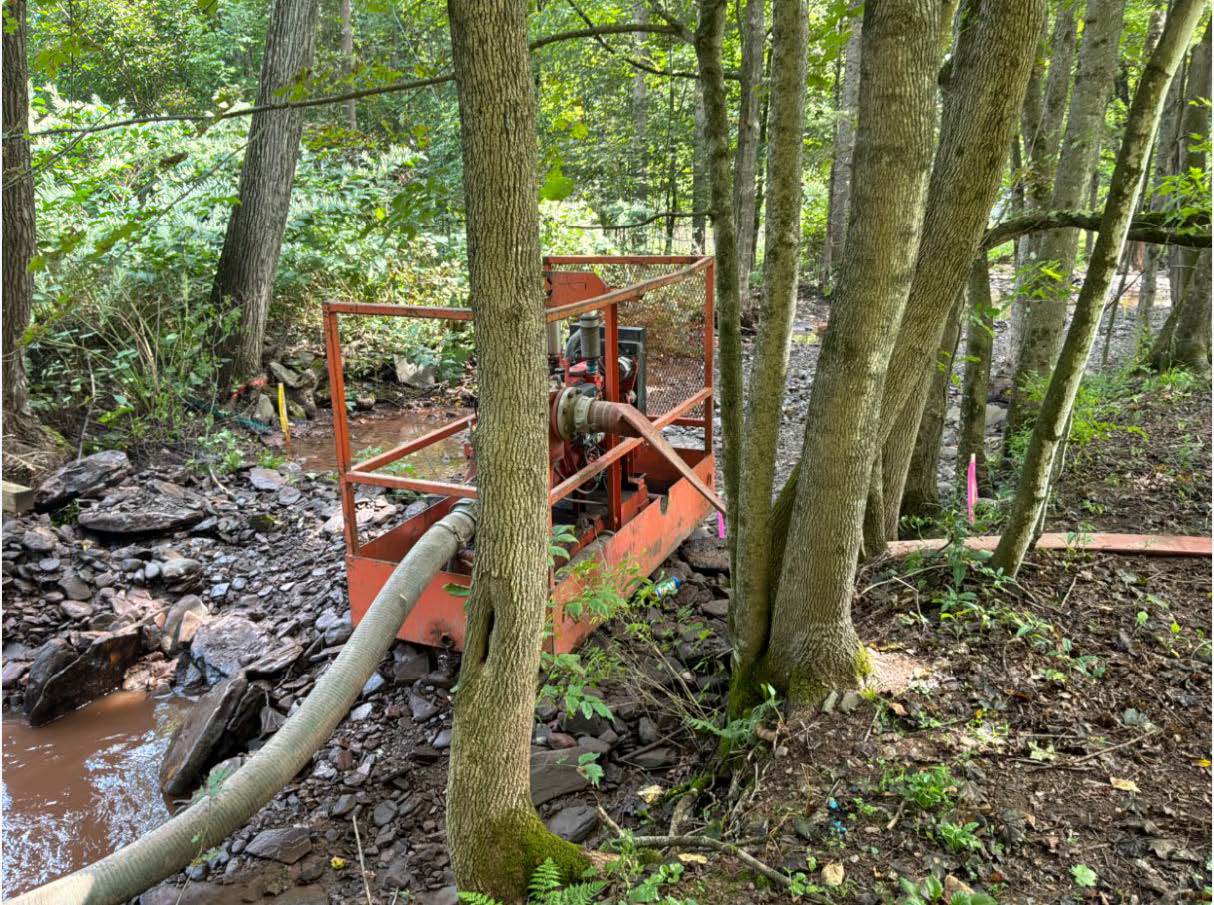
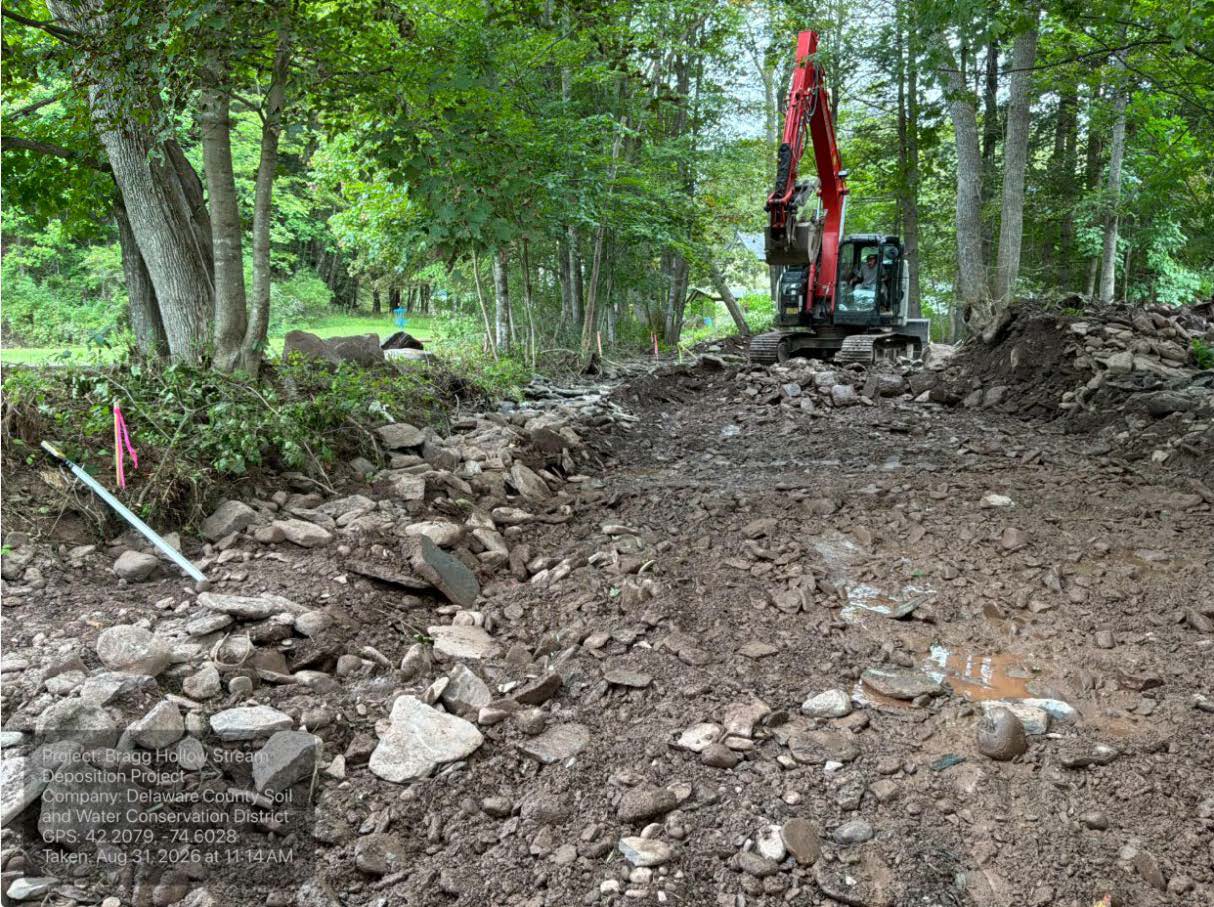
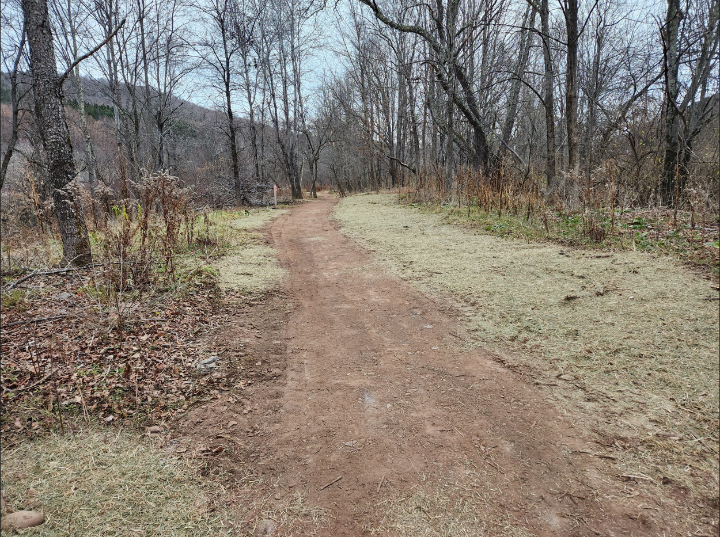
The purpose of the project is to improve recreation access along the East Branch Delaware River.
The Nature Preserve is a 33-acre property bordering the East Branch of the Delaware River. The proposed trail system will provide access to the northern portion of the property in order to provide recreational and educational opportunities to Catskill Water Discovery visitors. The property contains several different plant communities. The dense vegetative growth makes traversing and access to the site difficult. The proposed design trail length is 2,375 feet long loop. An access path that takes visitors from the Catskill Water Discovery Center follows along sidewalks until joining with the Catskill Recreation Center’s gravel walking path. A new section of gravel path will connect the two paths together at the railroad crossing. The trails will provide access to interpretive signs and small clearing for outdoor educational gatherings.
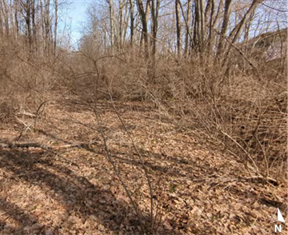
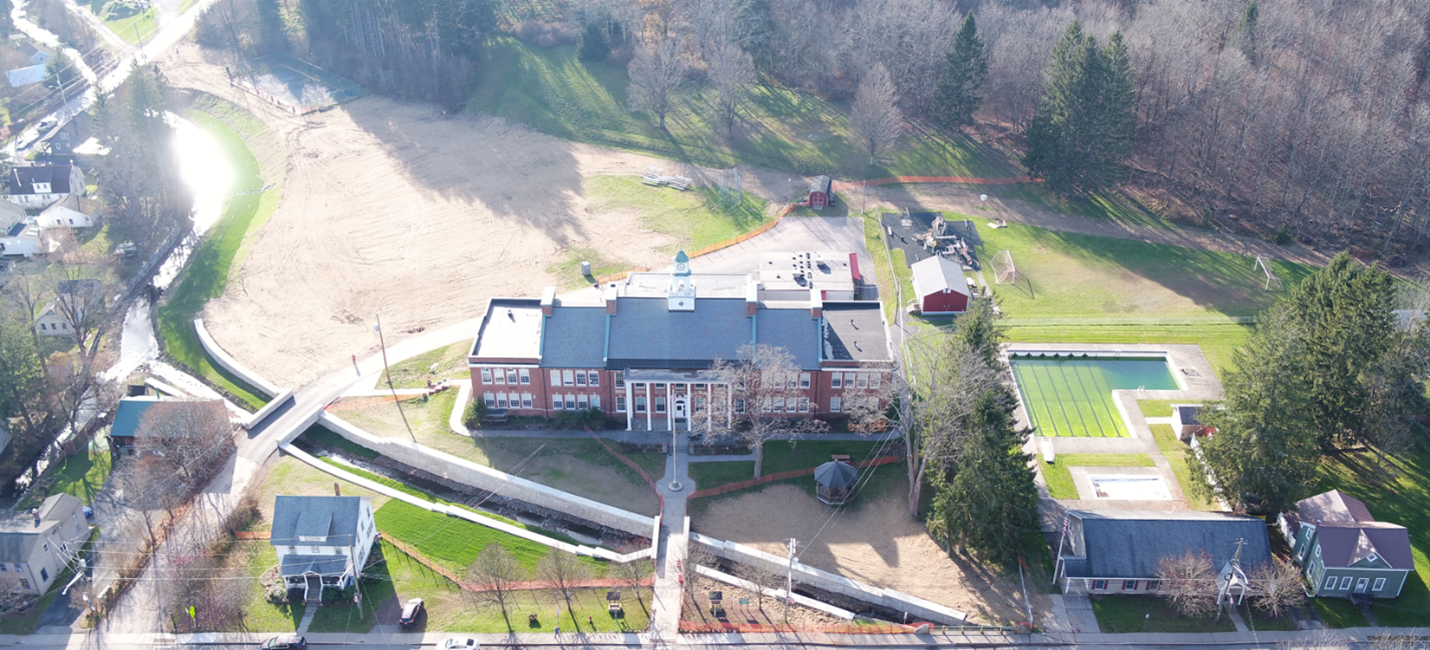
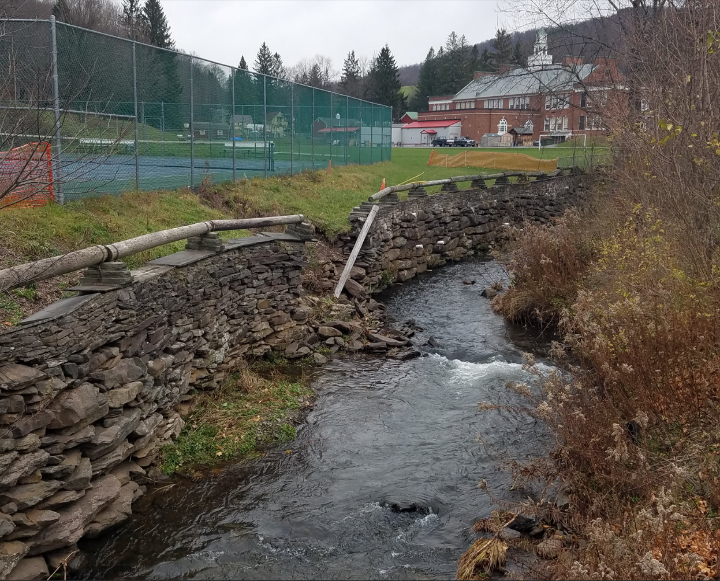
The purpose of the project is to replace the failing retaining walls along Liddle brook and Tremper Kill and the undersized and impaired Andes Central School bridge.
This project was identified in the Andes Local Flood Analysis (LFA) plan as a recommendation to increase the conveyance of Liddle Brook and the Tremper Kill within the reaches adjacent to the school. Existing sewer lines that were adjacent to the school’s tennis courts had the potential to be exposed which was a particular concern from an operational and water quality perspective. The sewer line served the school and two neighboring businesses. Located on the school’s property were stacked rock walls that lined along both of the banks of Liddle Brook and the Tremper Kill; sections of these rock walls had collapsed in recent years due to streambed degradation. Hydraulic erosion caused the rock walls to become undermined, and, in turn, threaten school property, private property, school-owned infrastructure, and town-owned infrastructure. The project consisted of replacement of the vehicular access bridge to ACS (the only vehicular entrance to the school); removal of the failing rock walls along Liddle Brook and Tremper Kill; construction of new precast concrete block retaining walls along Liddle Brook and Tremper Kill; construction of floodplain benches along Liddle Brook and Tremper Kill; riffle-step pool sequences within Liddle Brook; and riffle-pool sequences within the Tremper Kill.
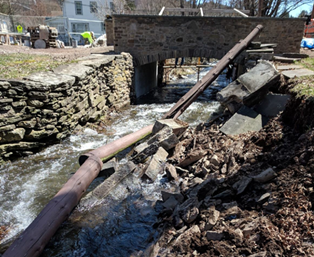
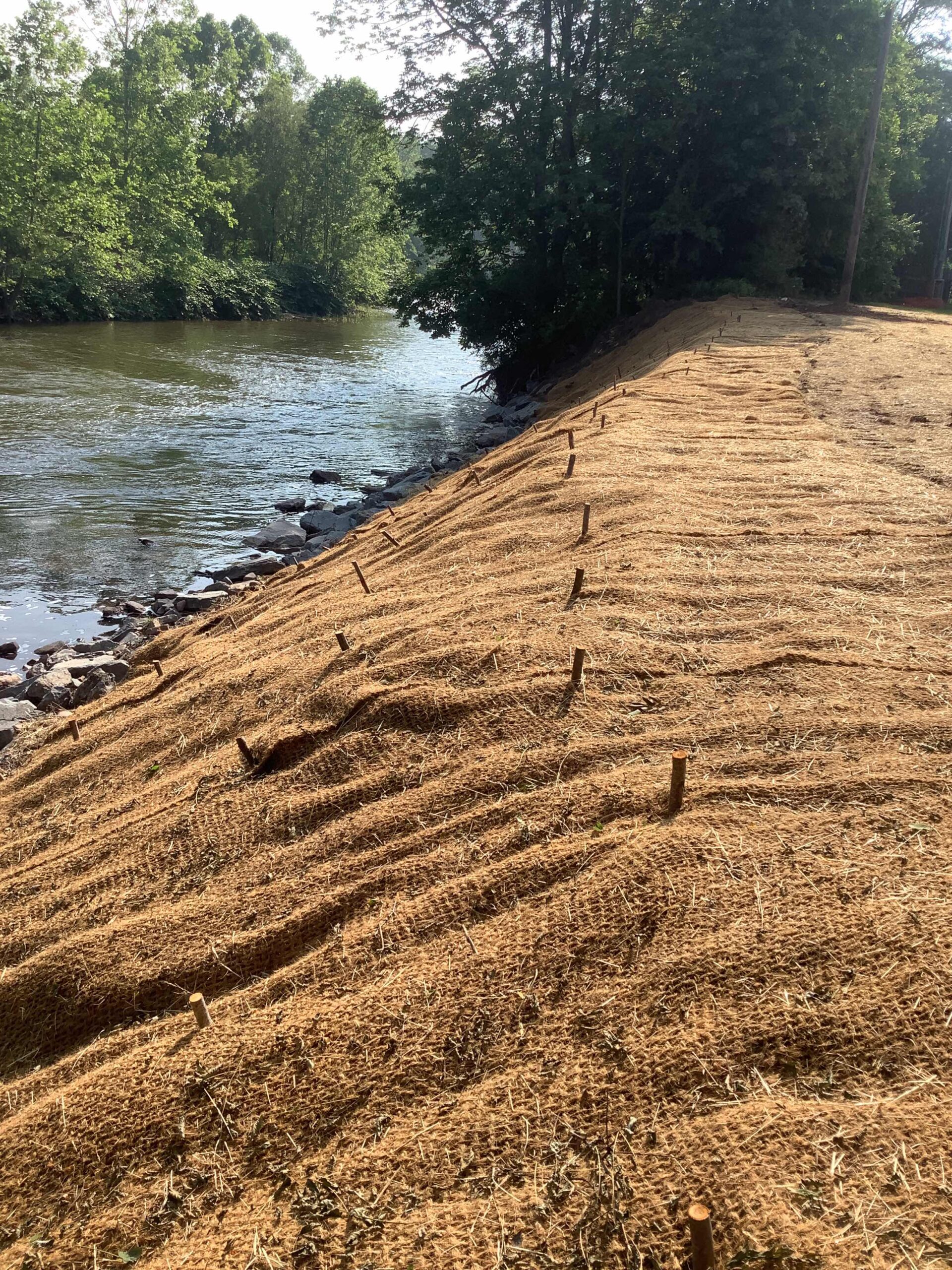
The purpose of the project is to protect the Delaware County Fairground and the existing main utility pole that services the Village of Walton.
The streambank was observed to be actively eroding along West Branch Delaware River and posed a significant risk to public infrastructure while also contributing a significant amount of sediment to the West Branch Delaware river. In order to maintain the safety and integrity of the utility and the public, the project consisted of removal of on-site material and placement of rock rip rap with topsoil. The rock was covered with soil to encourage vegetation growth and minimize thermal impacts to the river. Live willow stakes were planted along the embankment.
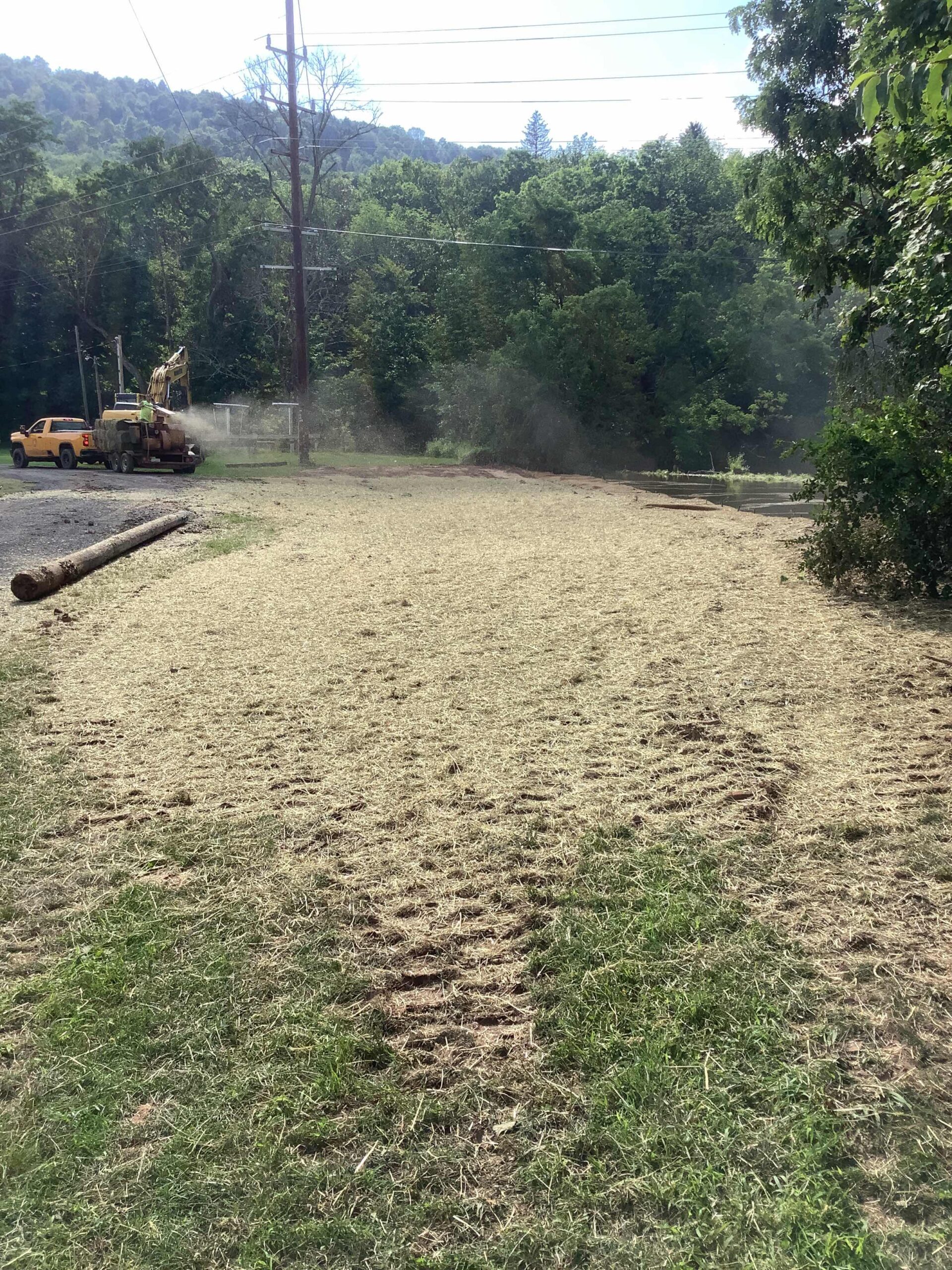
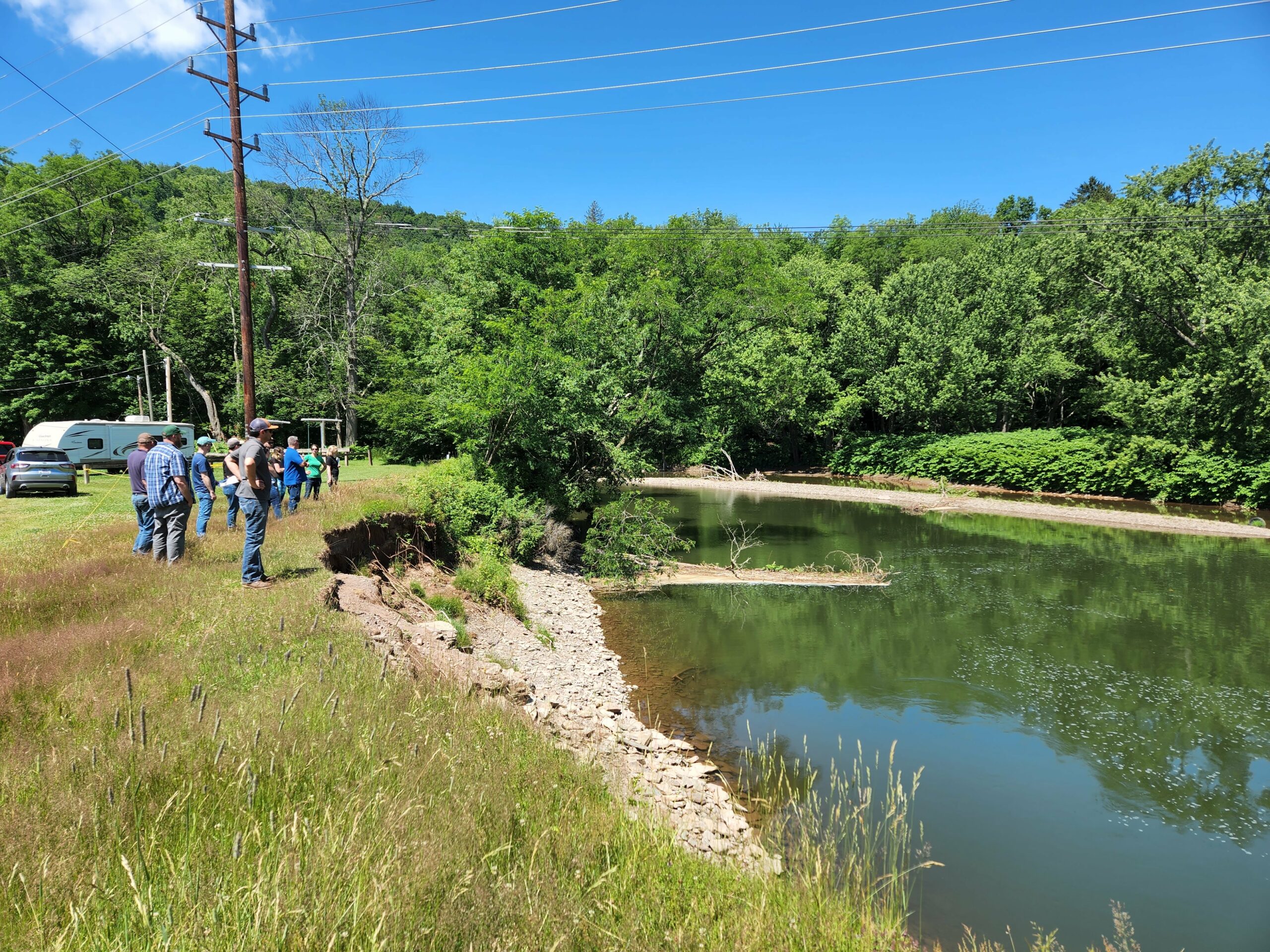
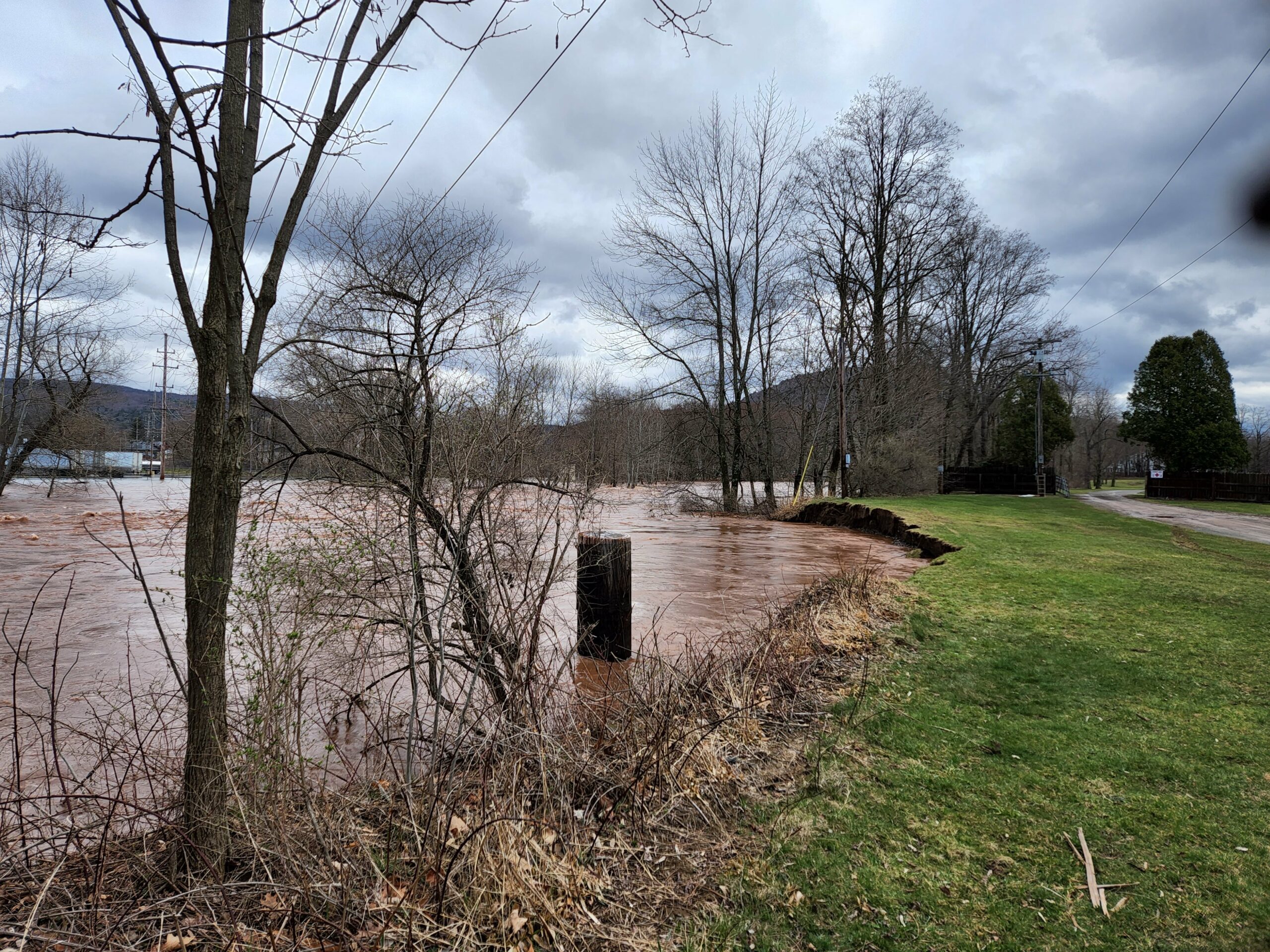
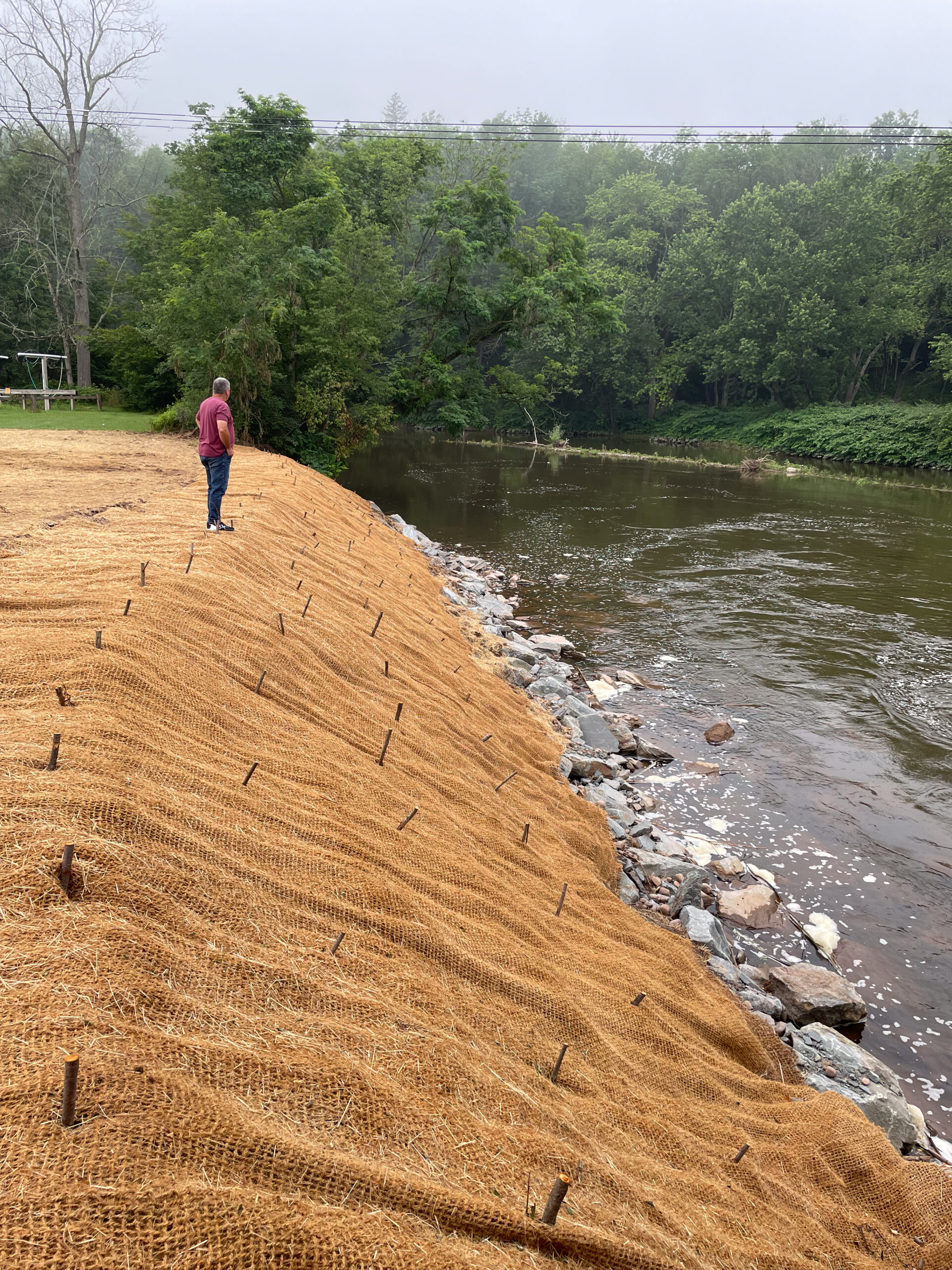
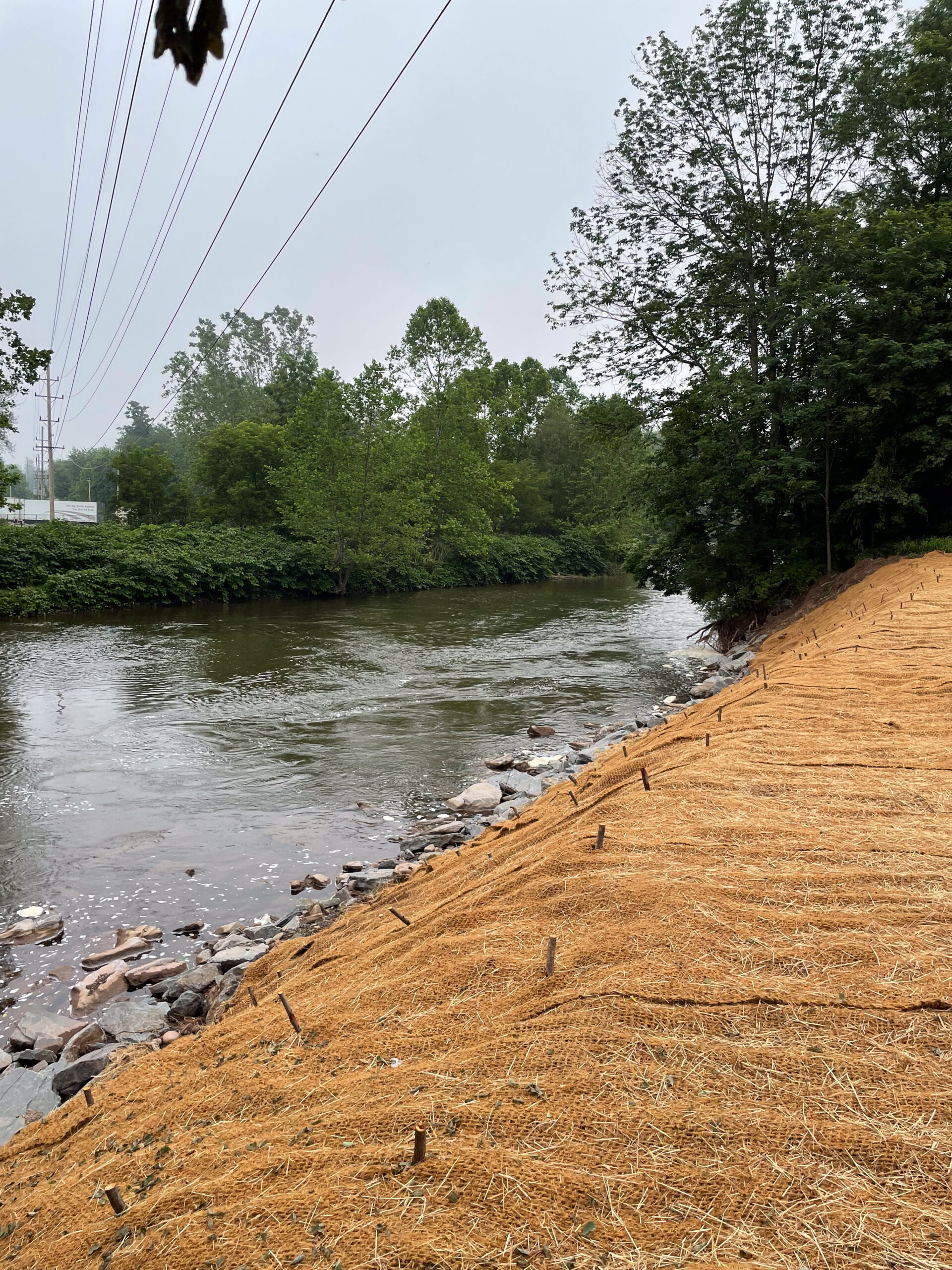
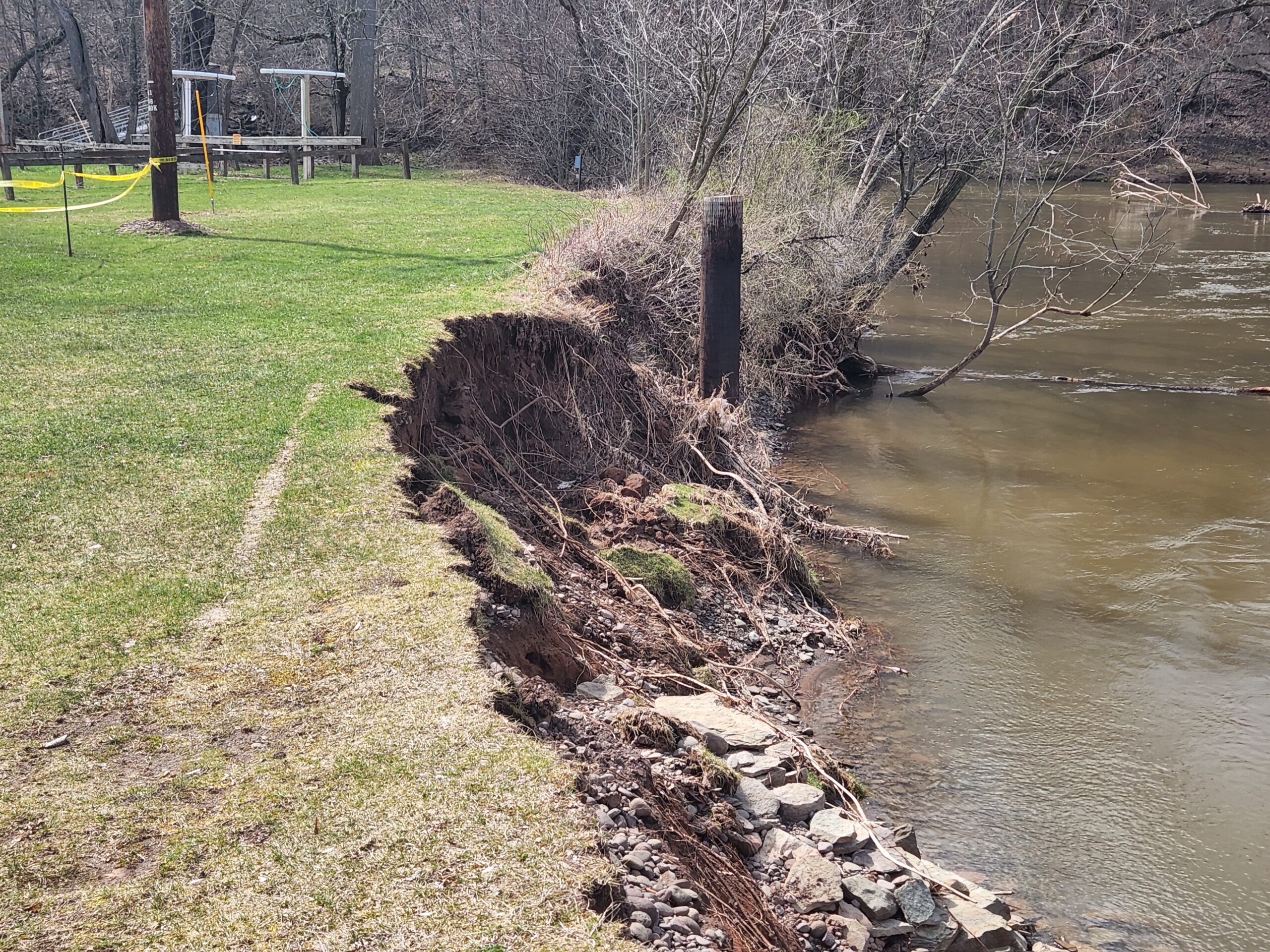
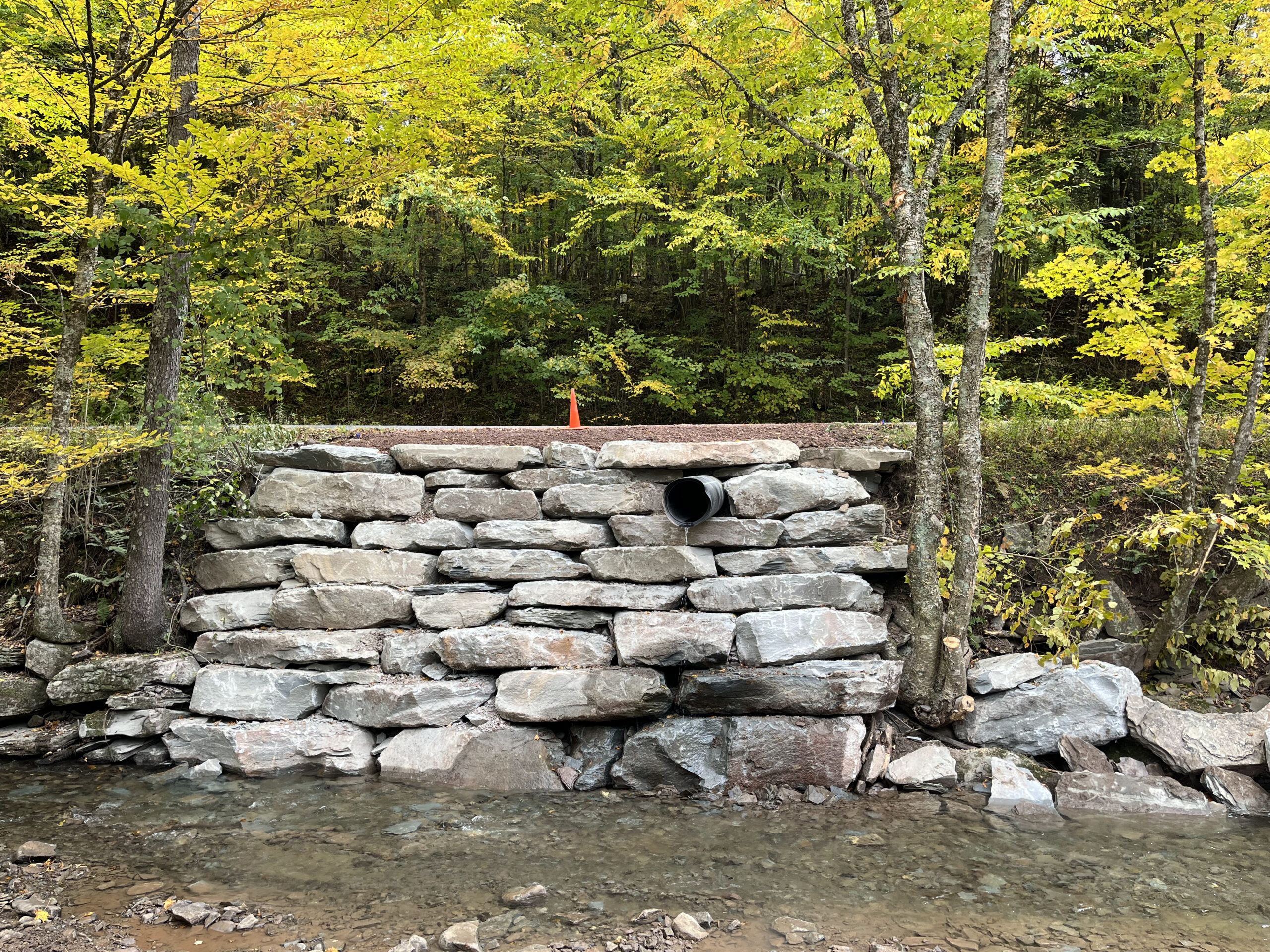
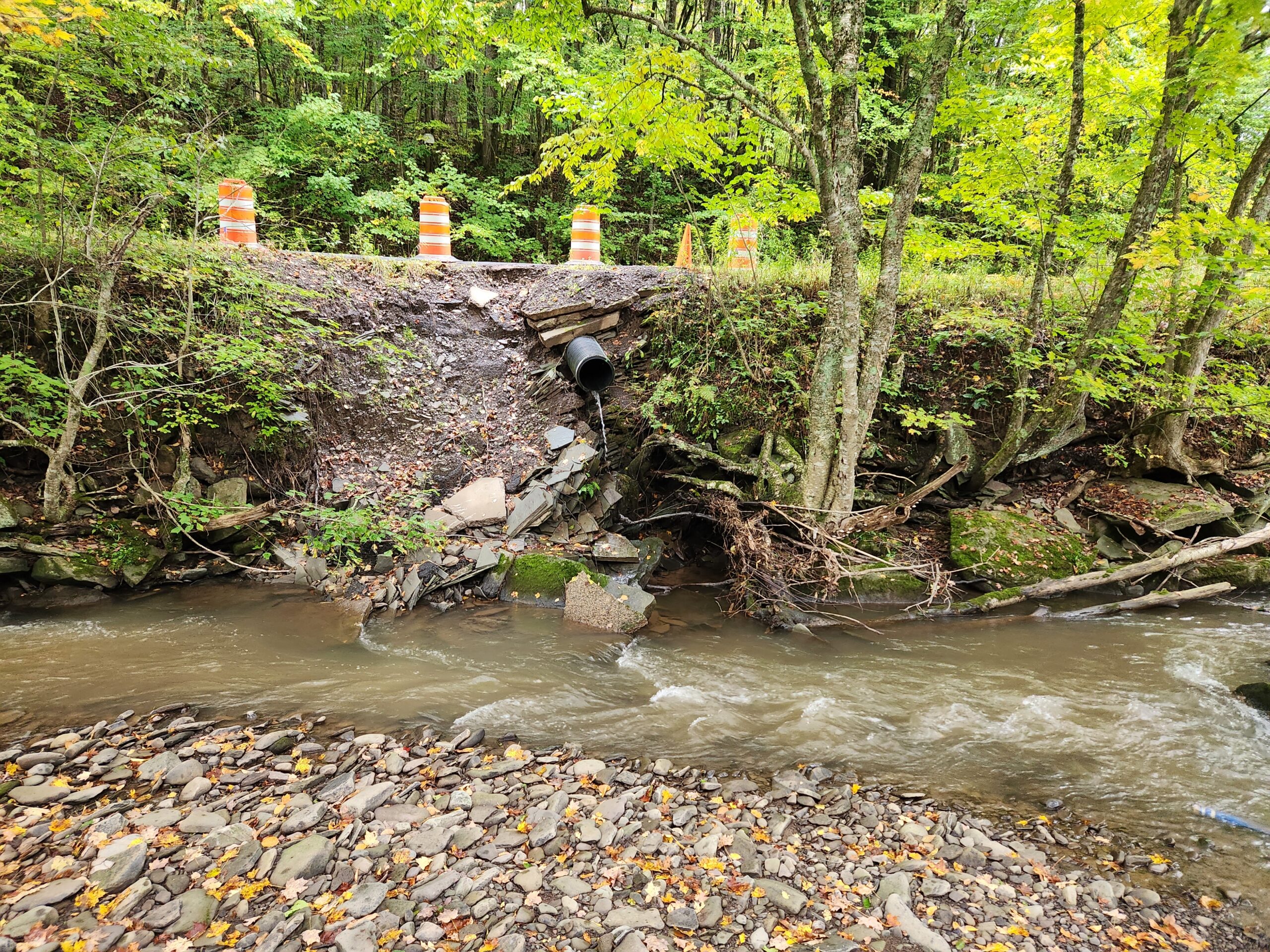
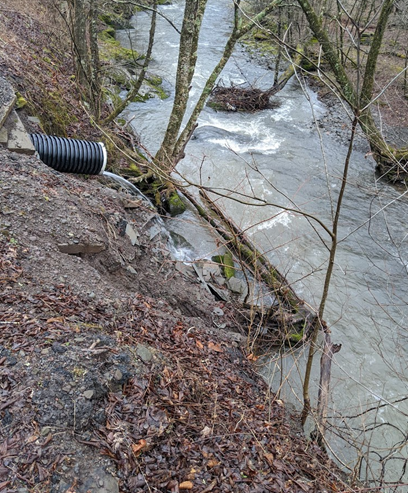
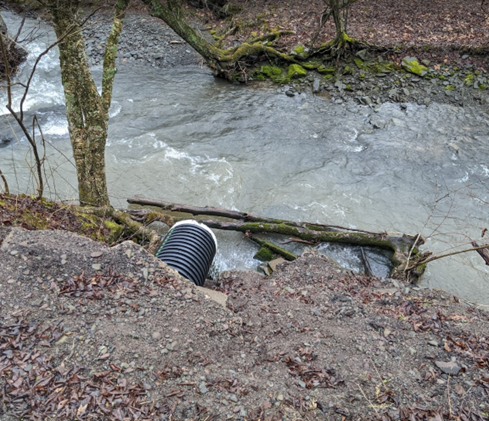
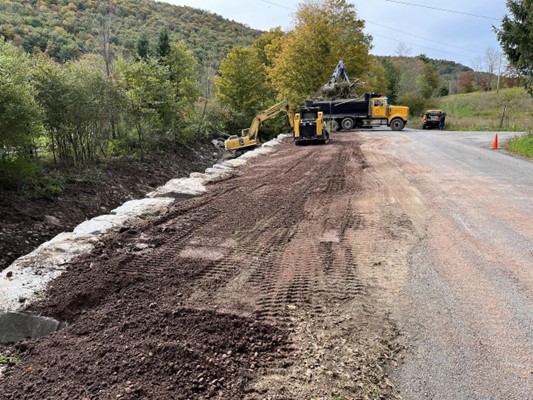
A storm event that occurred in the Town of Hamden between August 13 and August 15, 2018 resulted in streambank erosion at several locations adjacent to town-maintained roads. One of these locations, SL 4.62, is located at the Terry Clove Road, Basin Clove Road, and Coles Clove Road intersection. At the SL 4.62 site, the Basin Clove stream has eroded the road shoulder and undermined the roadway embankment. Continued lateral migration and hydraulic erosion at the toe of the roadway embankment threatens the integrity and safety of the town infrastructure. The Town of Hamden applied for grant funding through the Stream Management Program.
The project design stream length of 125 feet that included the placement of stacked and pinned rock wall along the left streambank and two (2) hardened riffles for grade control. The grade control structures would help maintain water quality by limiting any potential head-cuts from advancing upstream. This design would implement the project goals and objectives established by the Stream Management Program staff, while providing water quality benefits for the New York City Department of Environmental Protection (DEP) and communities that rely on drinking water sources from the West-of-Hudson River Watershed.
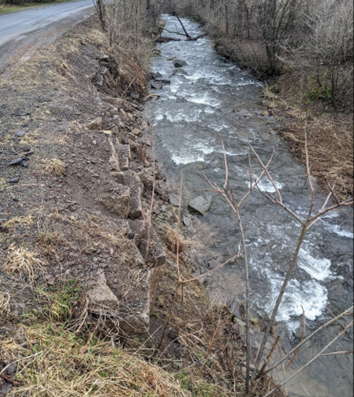
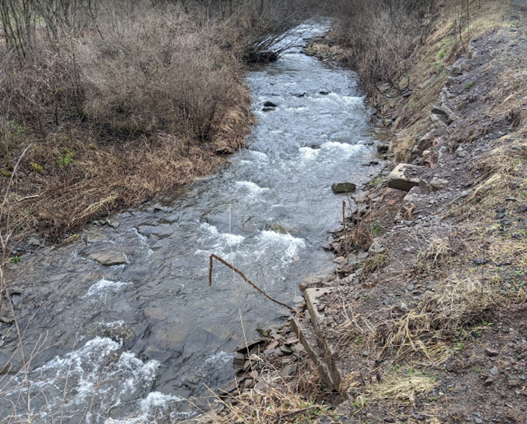
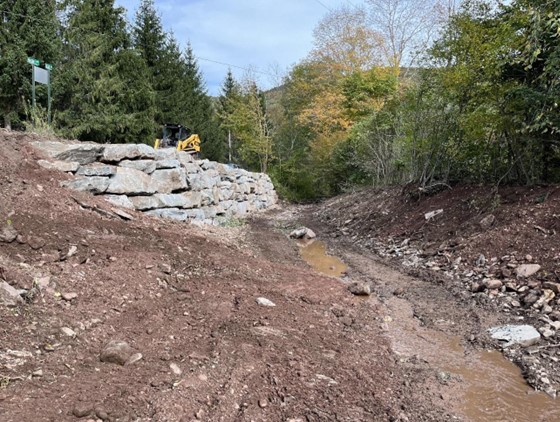
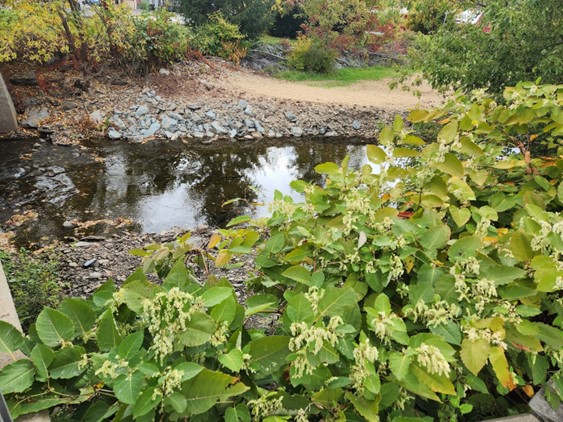
West Brook is one of the three tributaries flowing through the Village of Walton. Vertical stacked rock walls, urban development and encroachment, and a general lack of floodplain connectivity are common issues along the West Brook stream corridor through the Village. Energy dissipation is minimal and, with lateral migration inhibited, the bed of West Brook has continued to erode. At Site #8, a water main concrete encasement is exposed. Despite the adjacent floodplain enhancement project along the right bank, this crossing is at risk of being damaged or undermined during a future storm event. The Village of Walton applied for grant funding through the Stream Management Program.
The streambank was observed to be actively eroding along West Branch Delaware River and posed a significant risk to public infrastructure while also contributing a significant amount of sediment to the West Branch Delaware river. In order to maintain the safety and integrity of the utility and the public, the project consisted of removal of on-site material and placement of rock rip rap with topsoil. The rock was covered with soil to encourage vegetation growth and minimize thermal impacts to the river. Live willow stakes were planted along the embankment.
The Village of Walton owns numerous underground utilities that cross three major tributaries of the West Branch Delaware River within the Village limits. At thirteen known locations, the utilities – water, sewer, or both, in close proximity – are threatened by the three tributaries’ continued streambed scour. Previous storm events, including most recently in 2006, resulted in damage to five of the thirteen crossing locations, leading to costly utility repairs, temporary lack of potable water for Village residents, and raw sewage leaks. Potential leaks could contaminate the West Branch and the Cannonsville Reservoir downstream, one of New York City’s unfiltered drinking water supply sources.
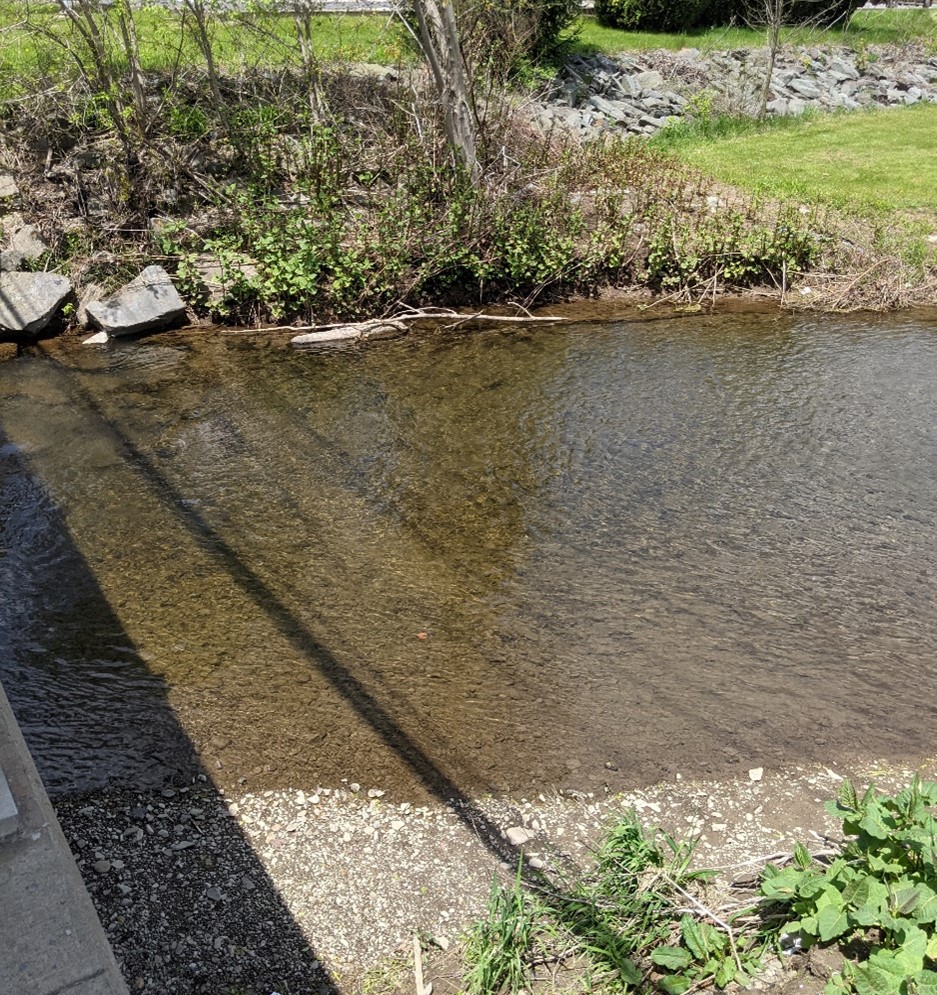
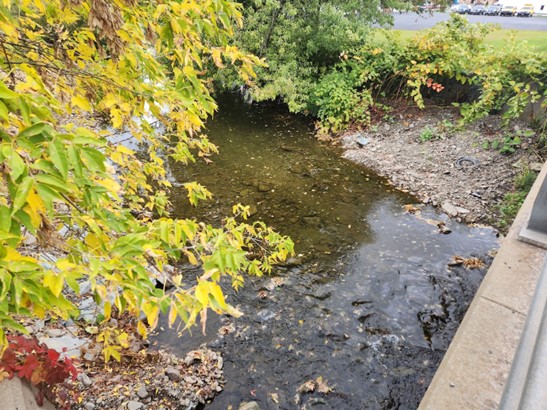
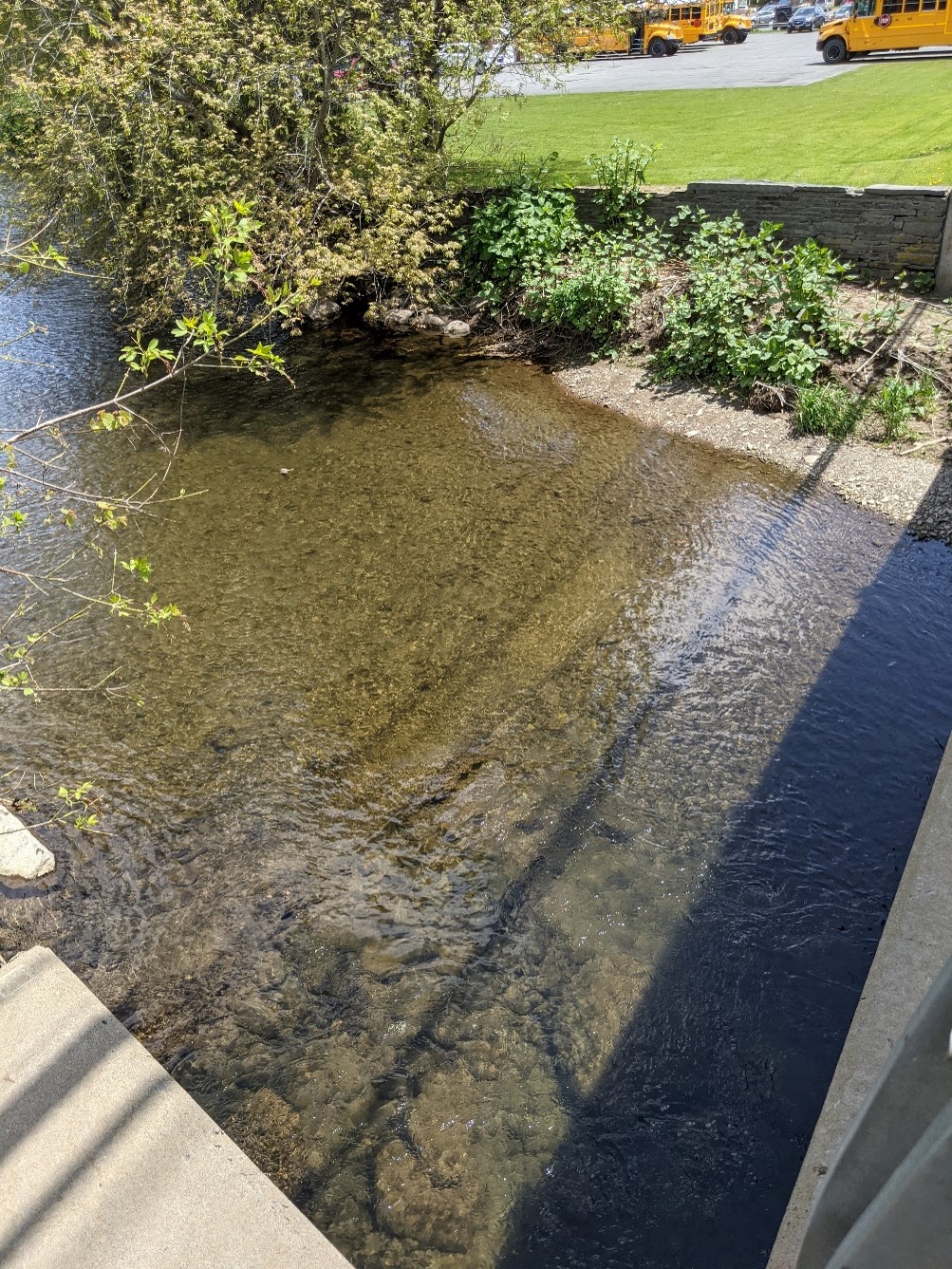
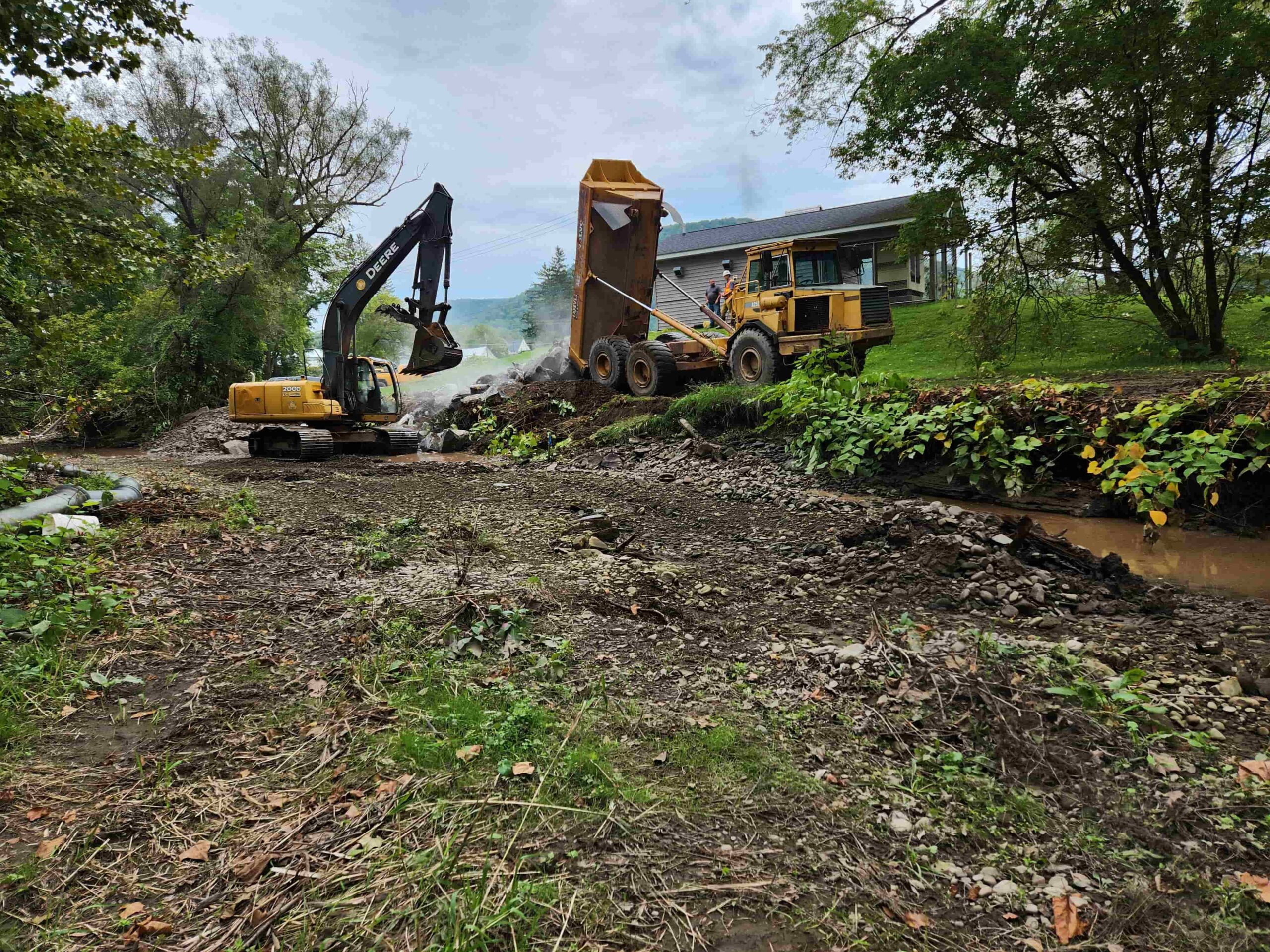
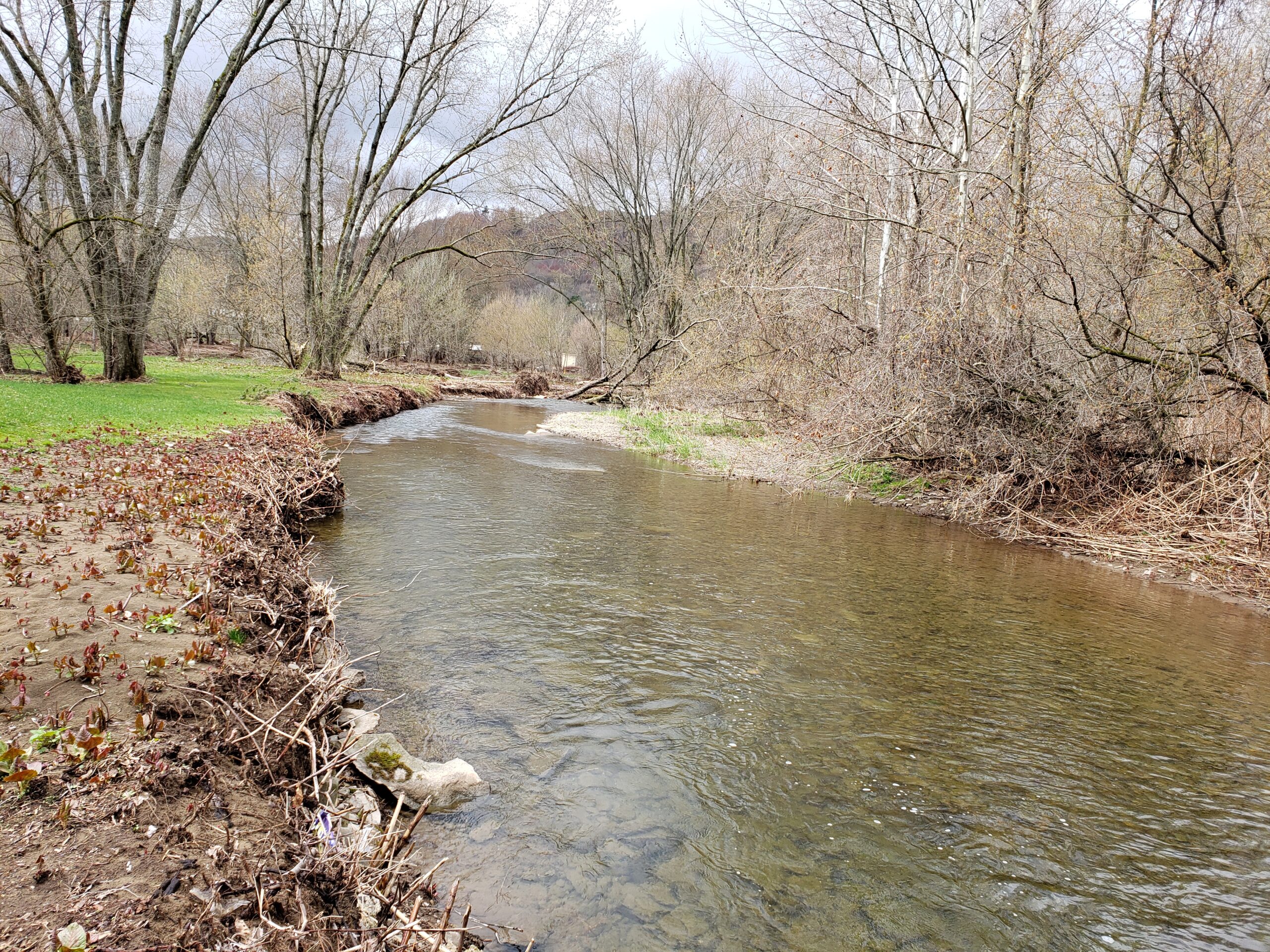
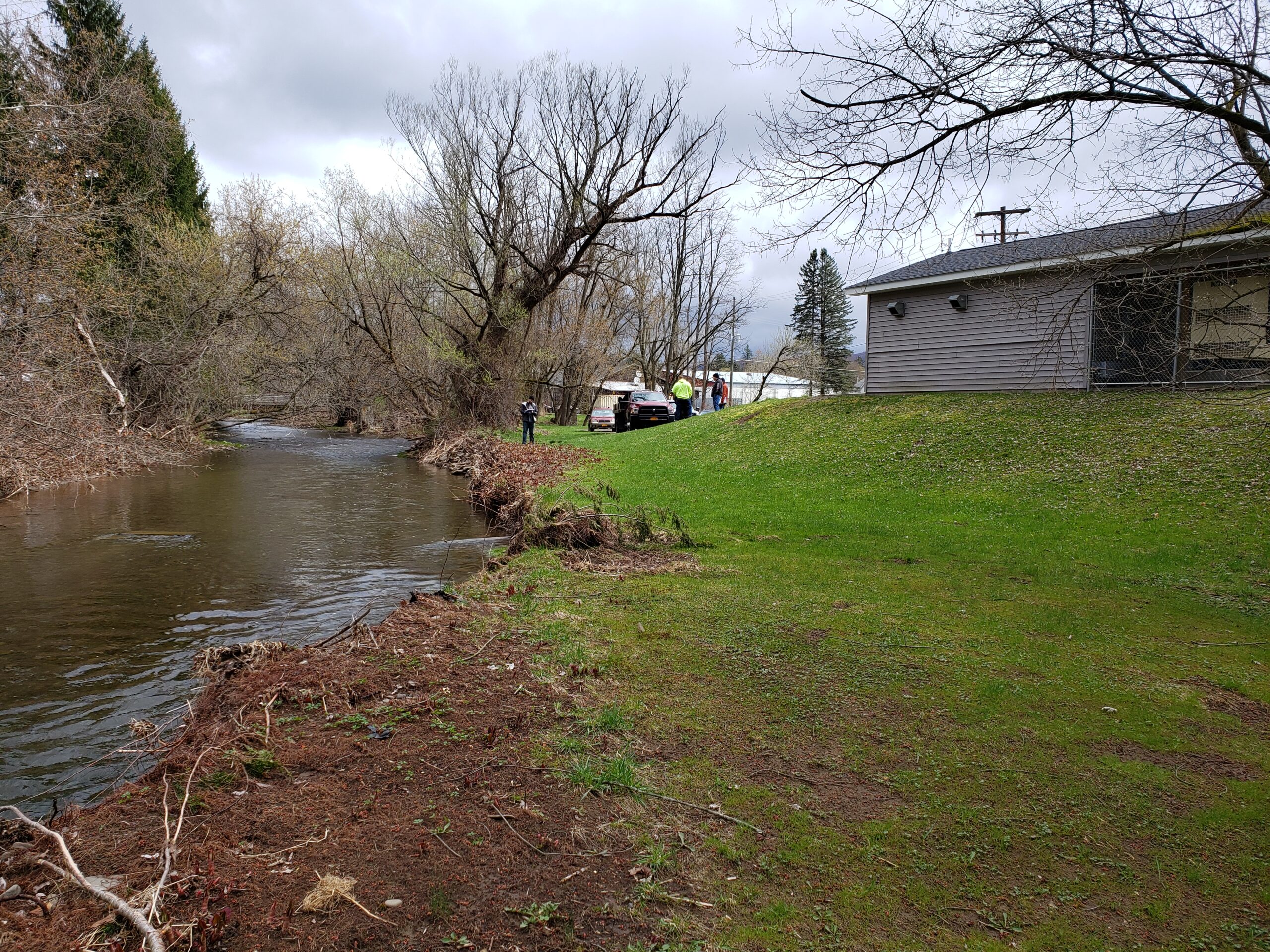
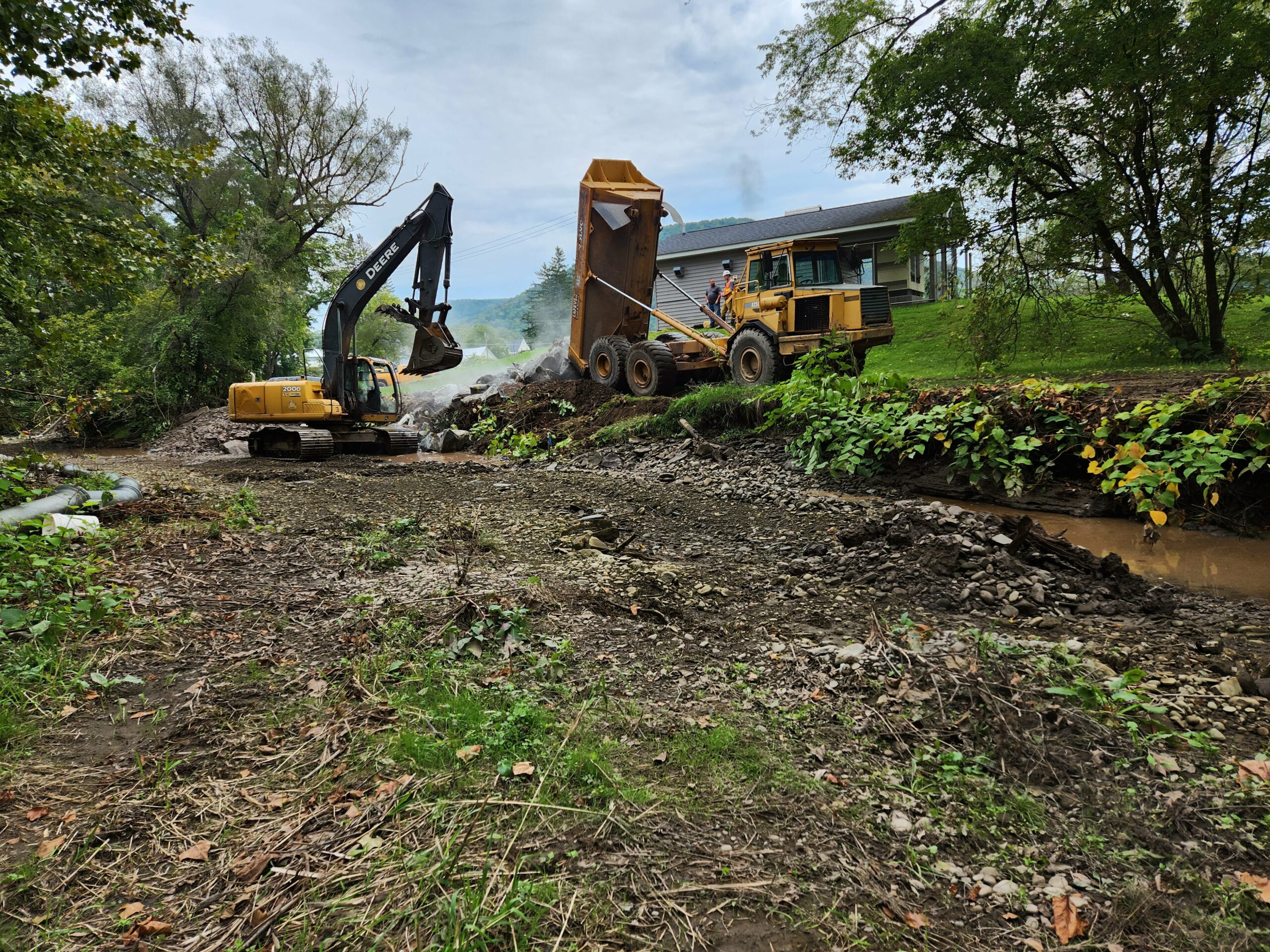
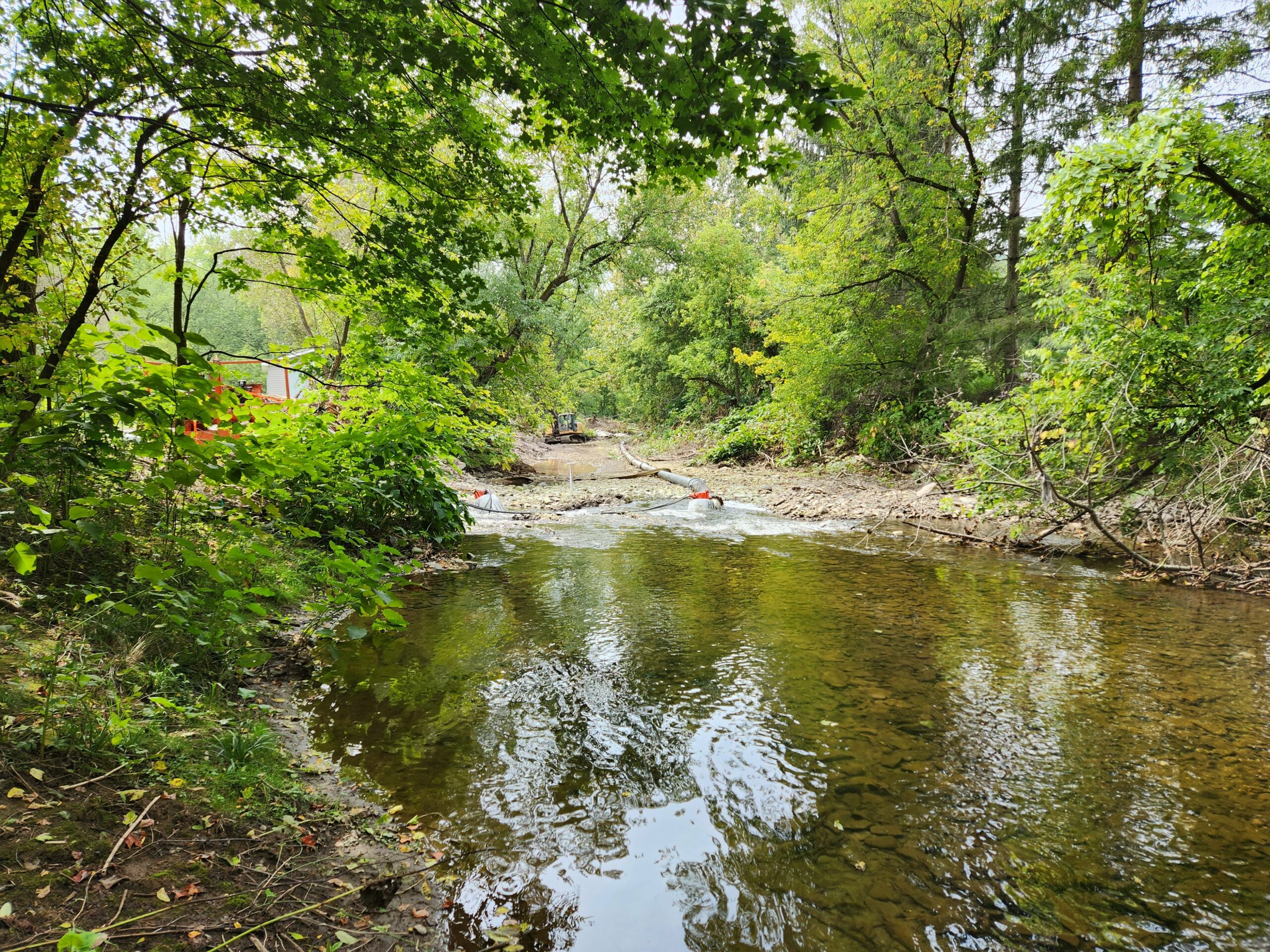
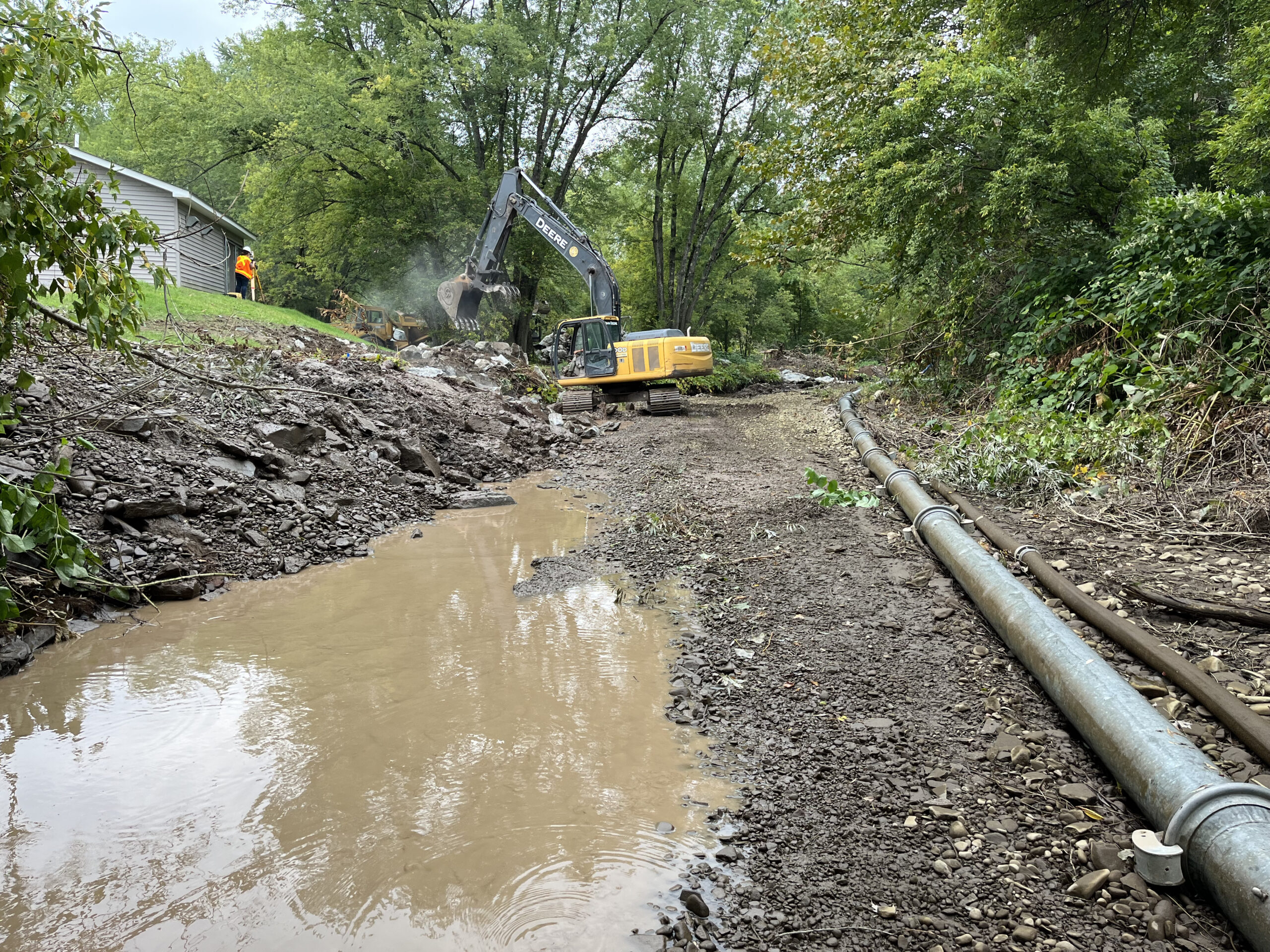
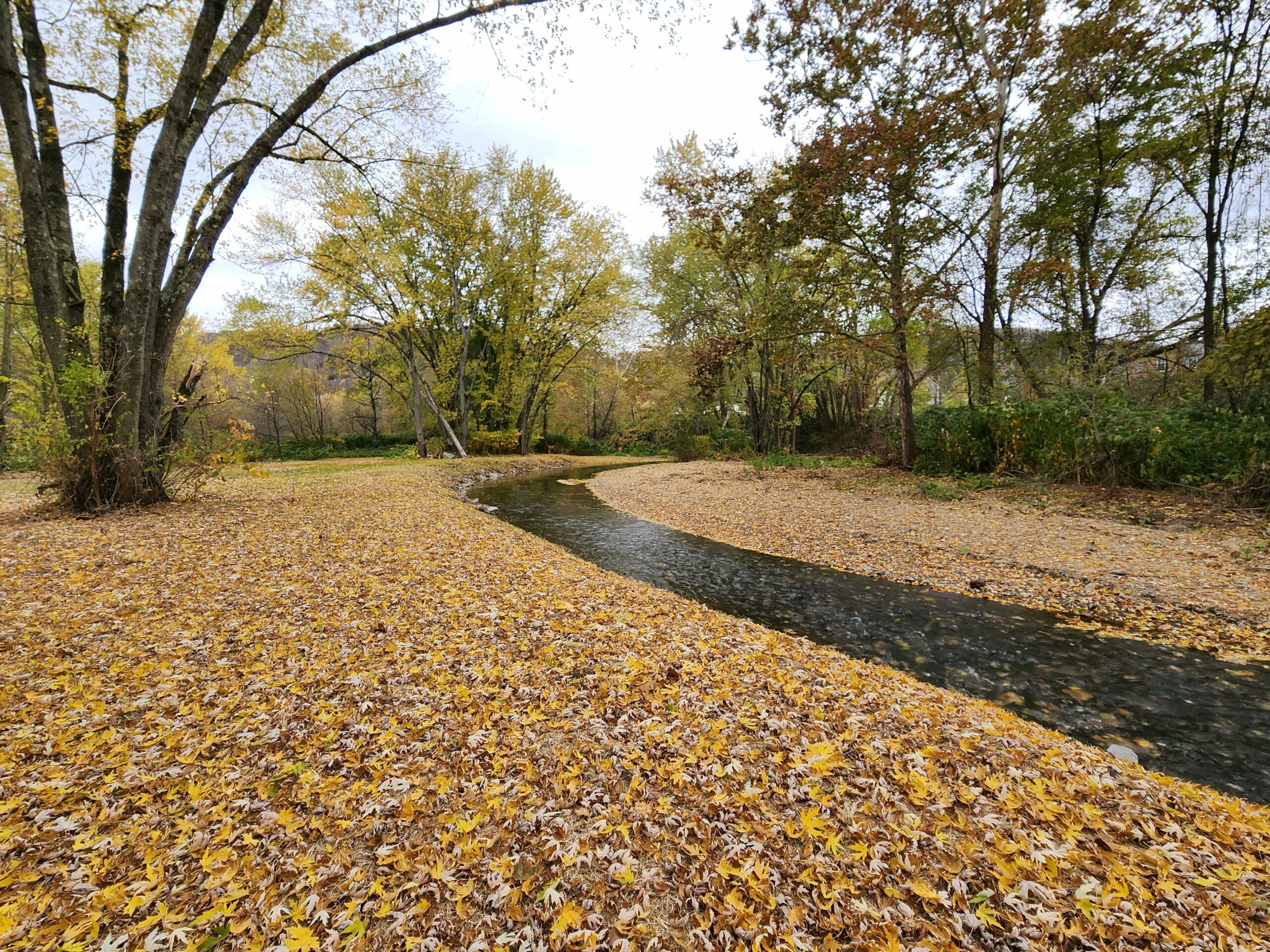
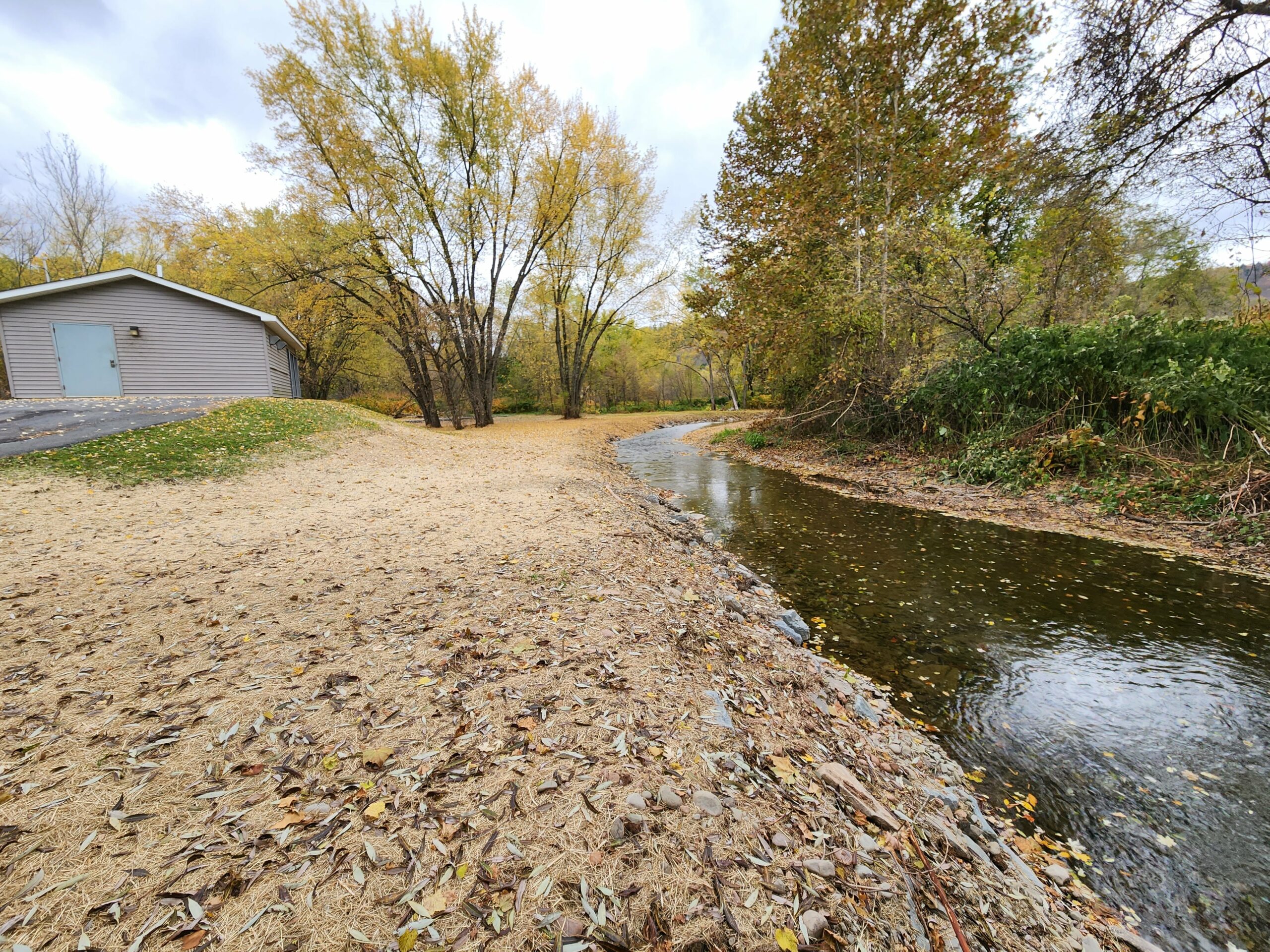
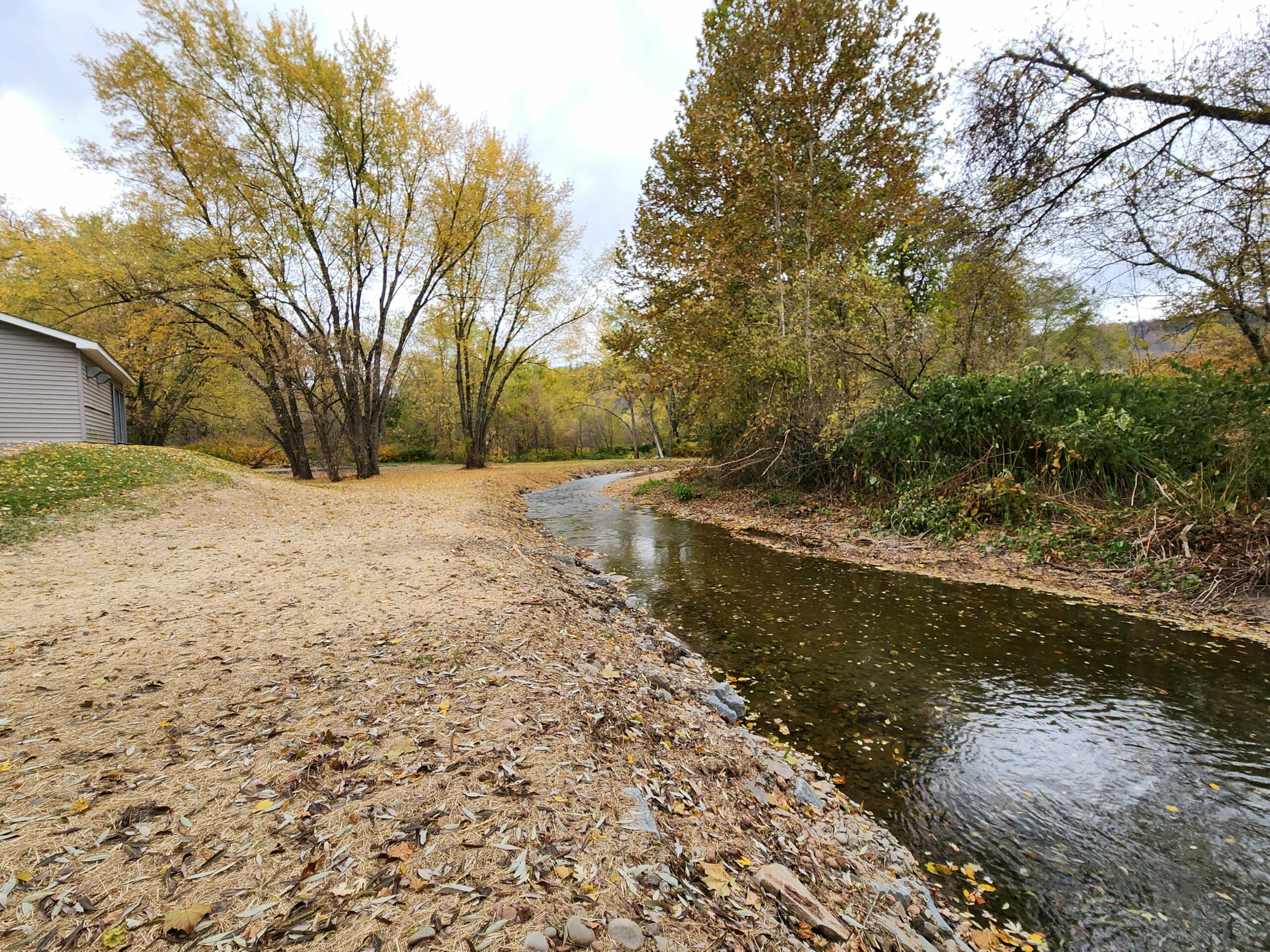
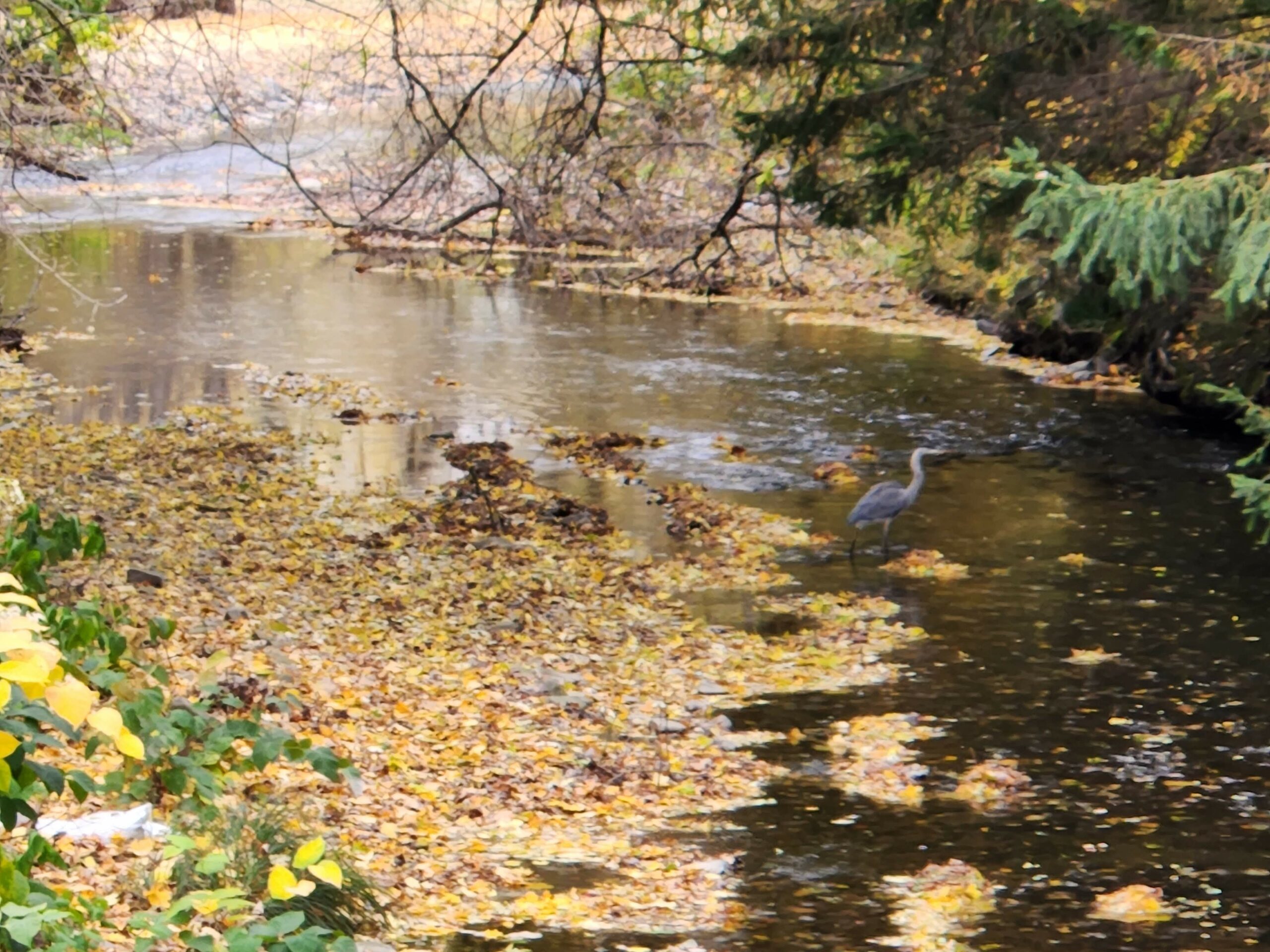
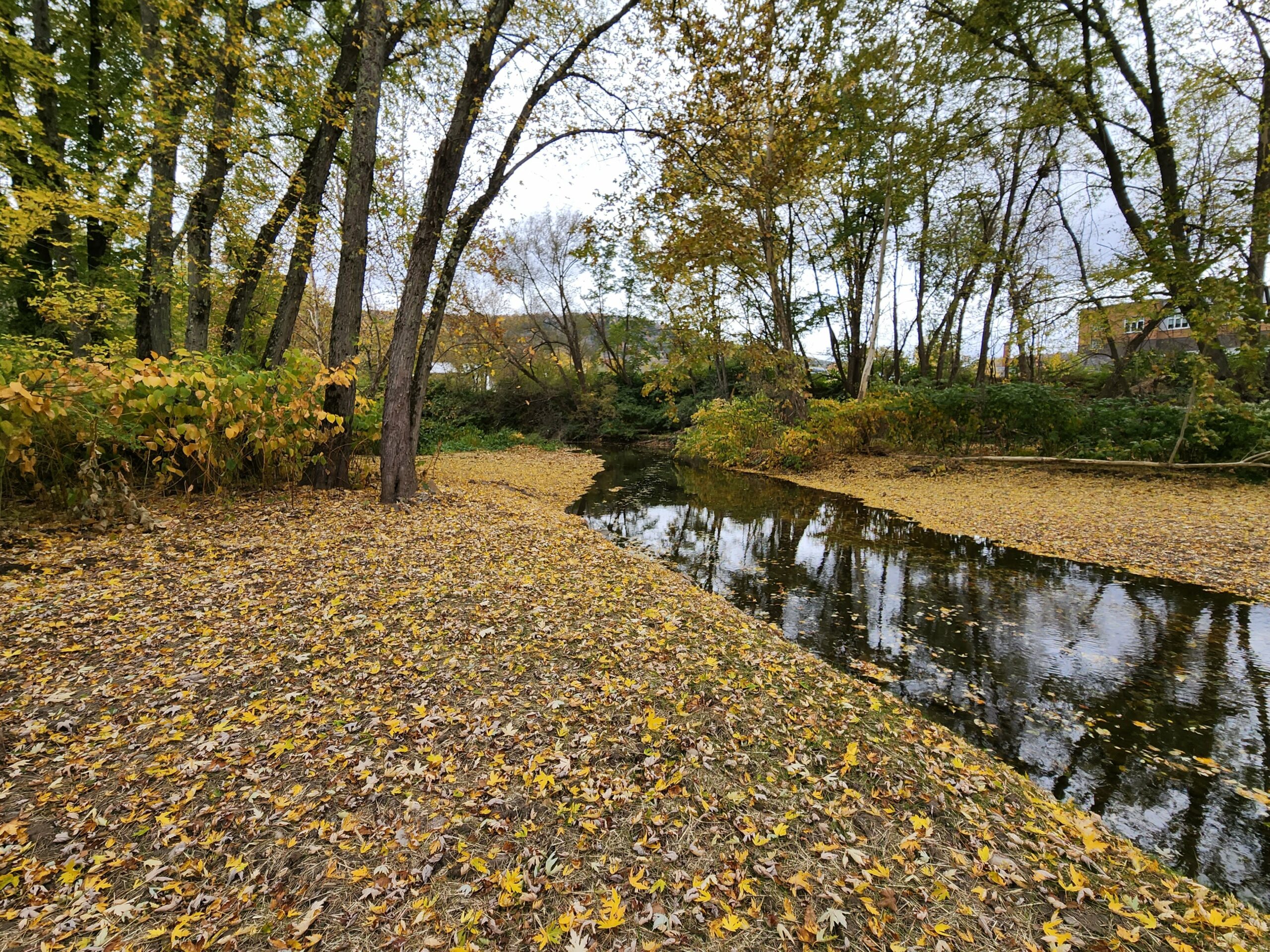
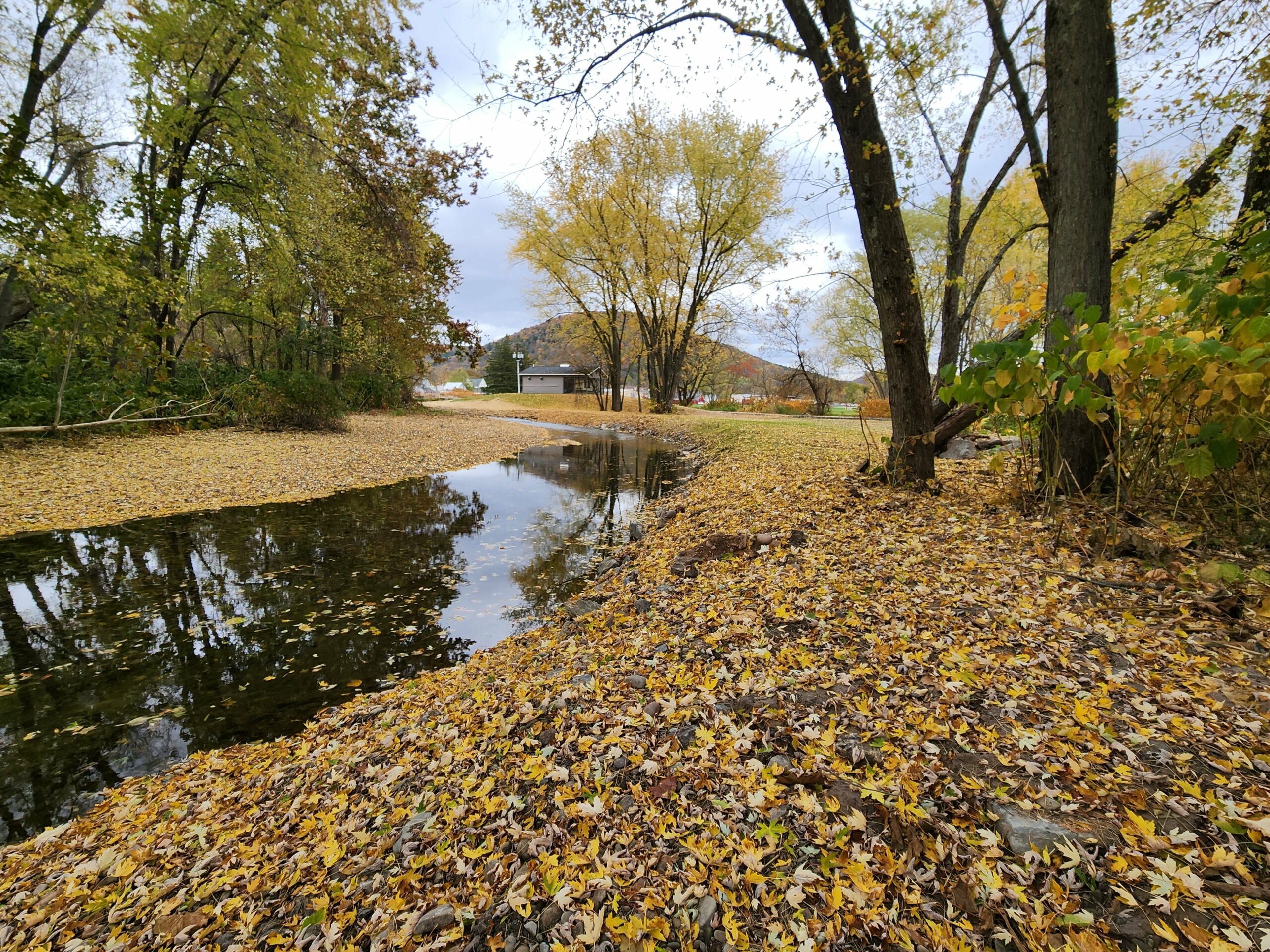
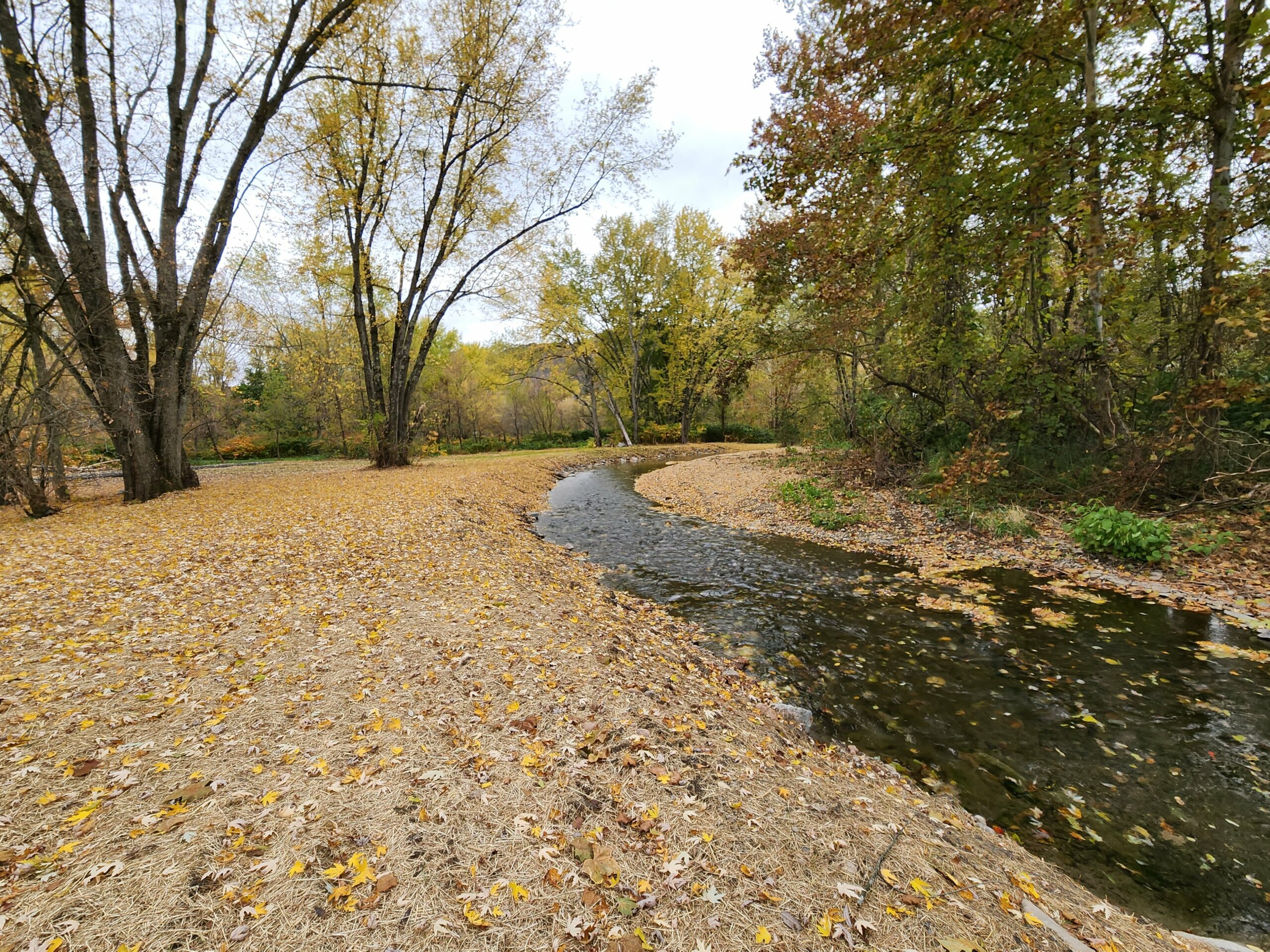
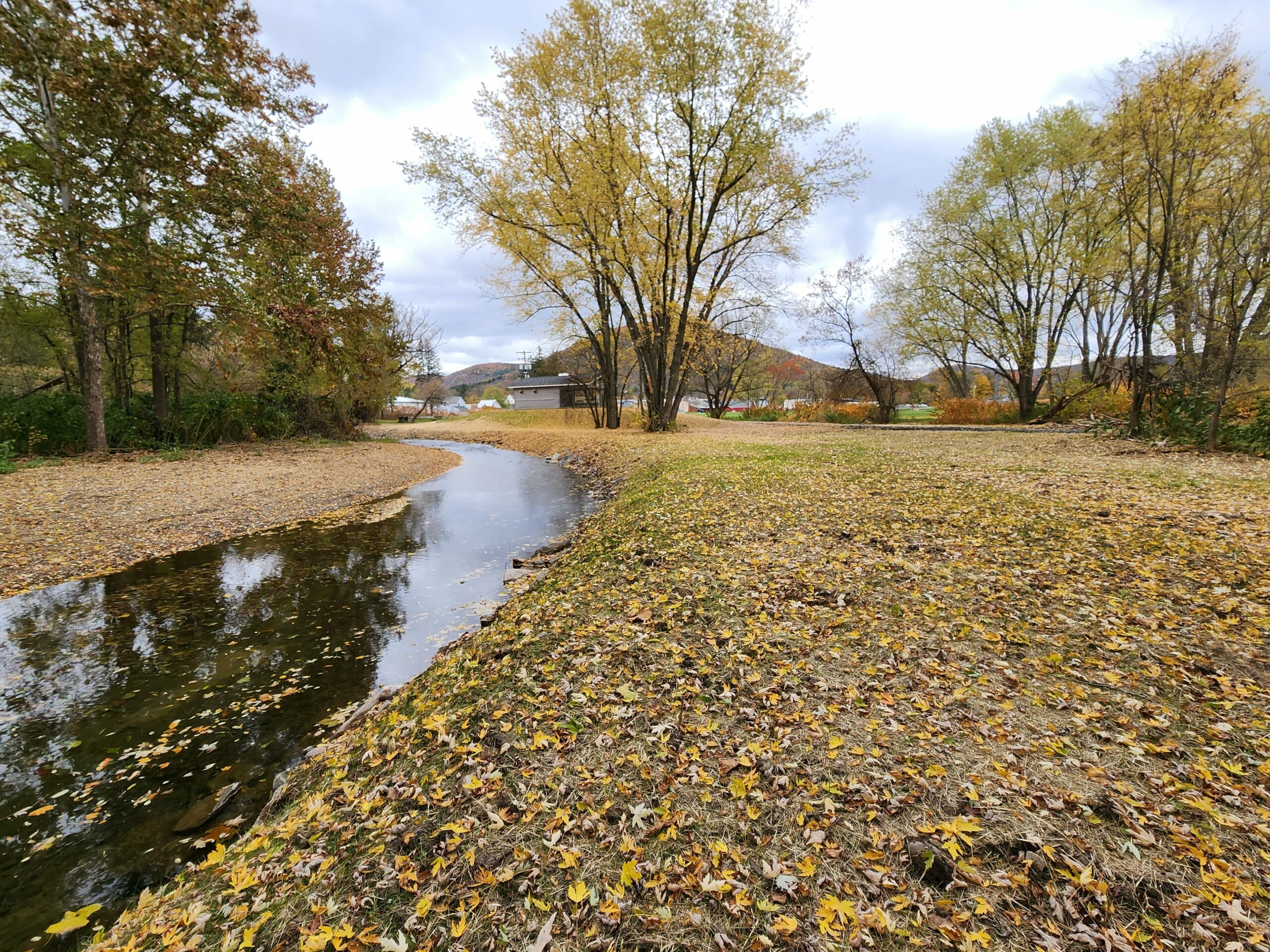
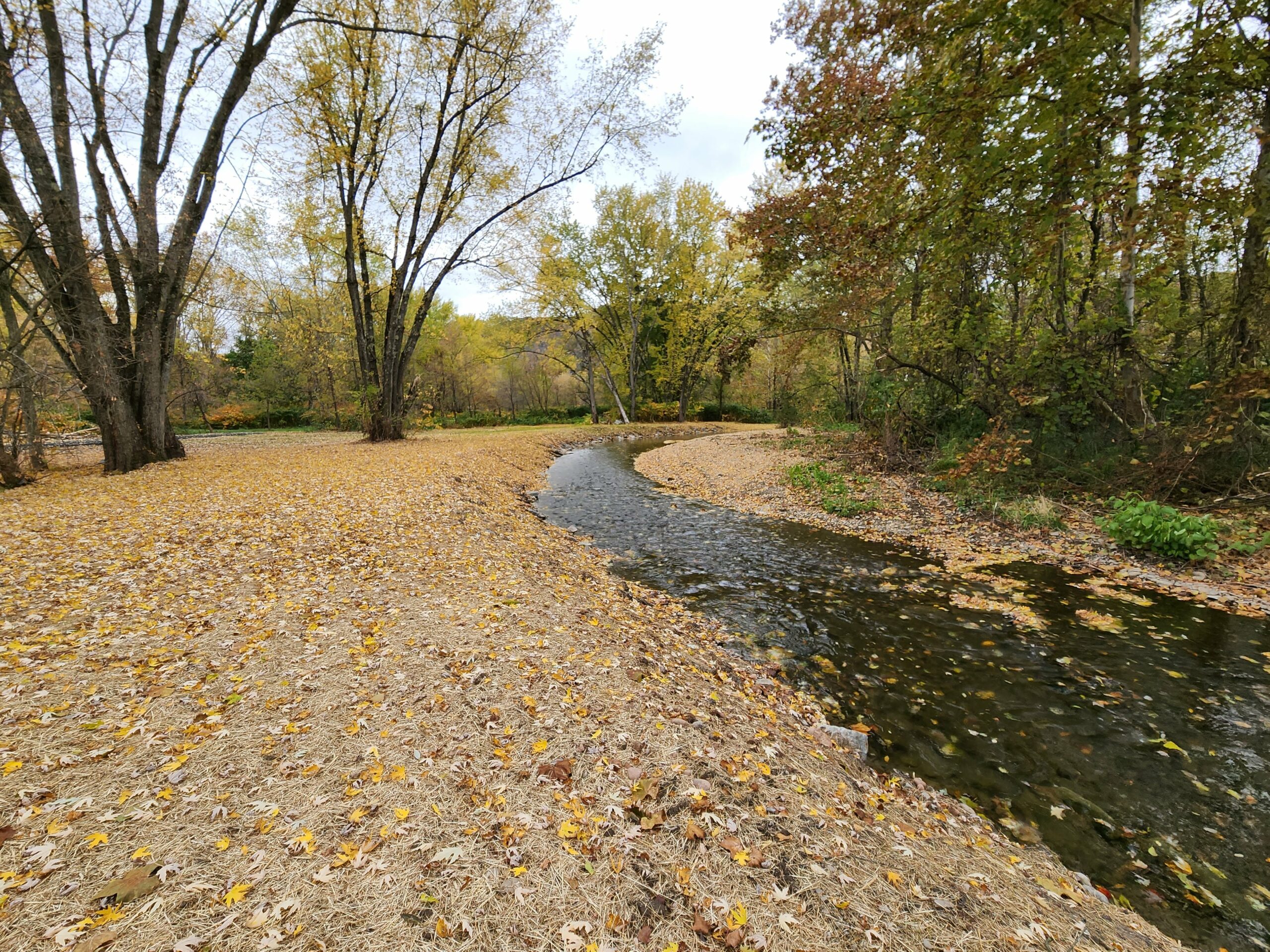
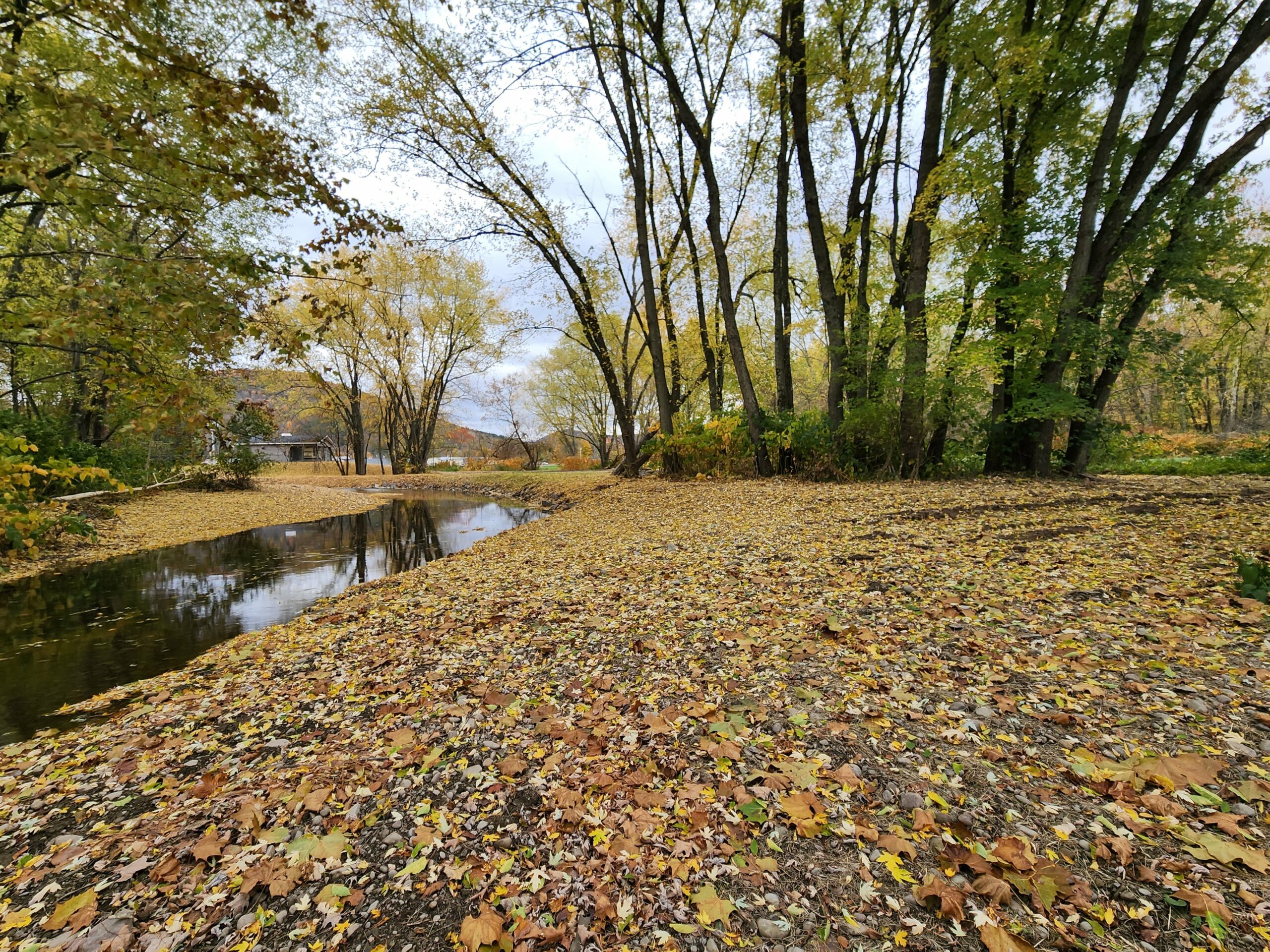
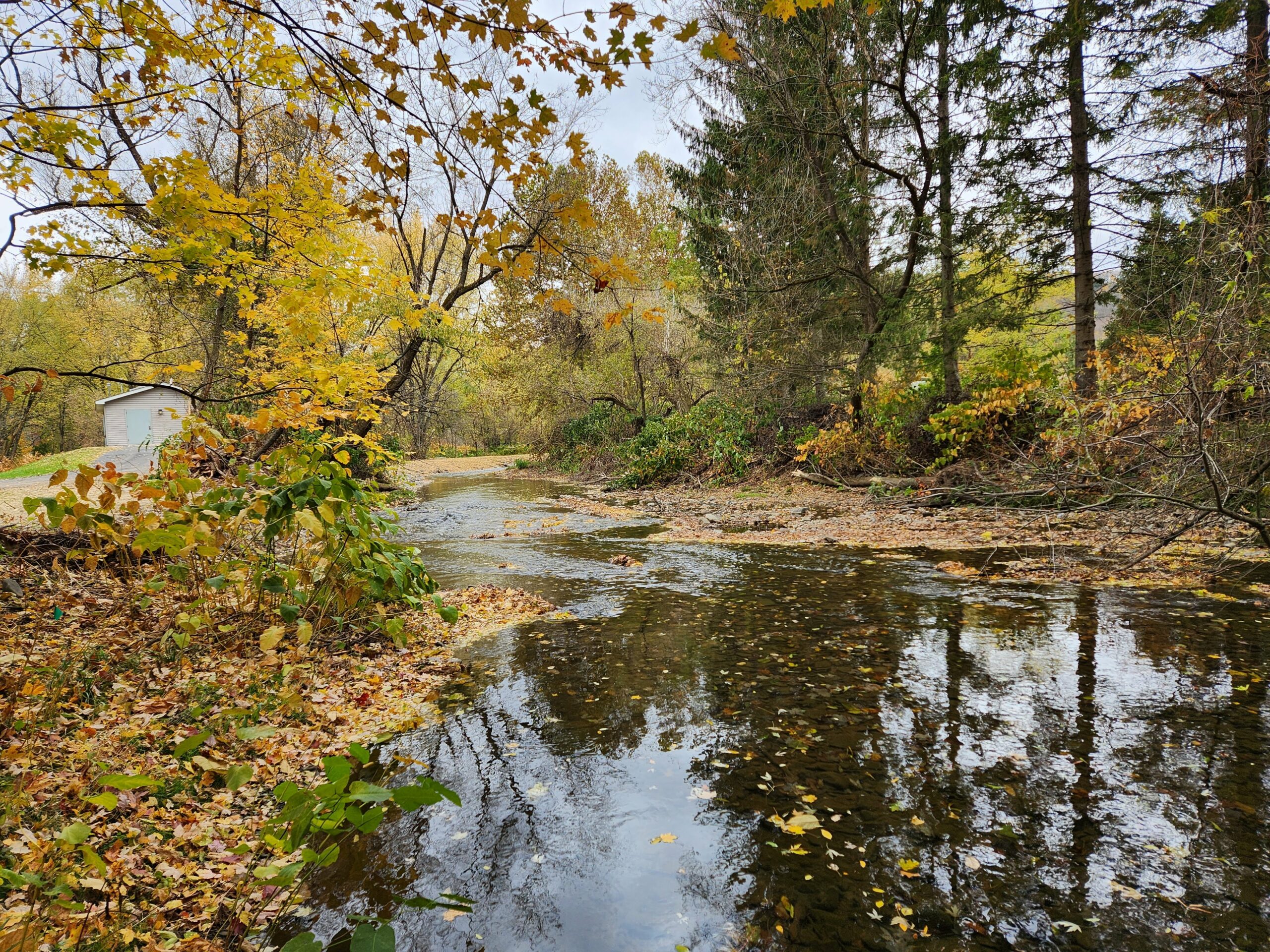
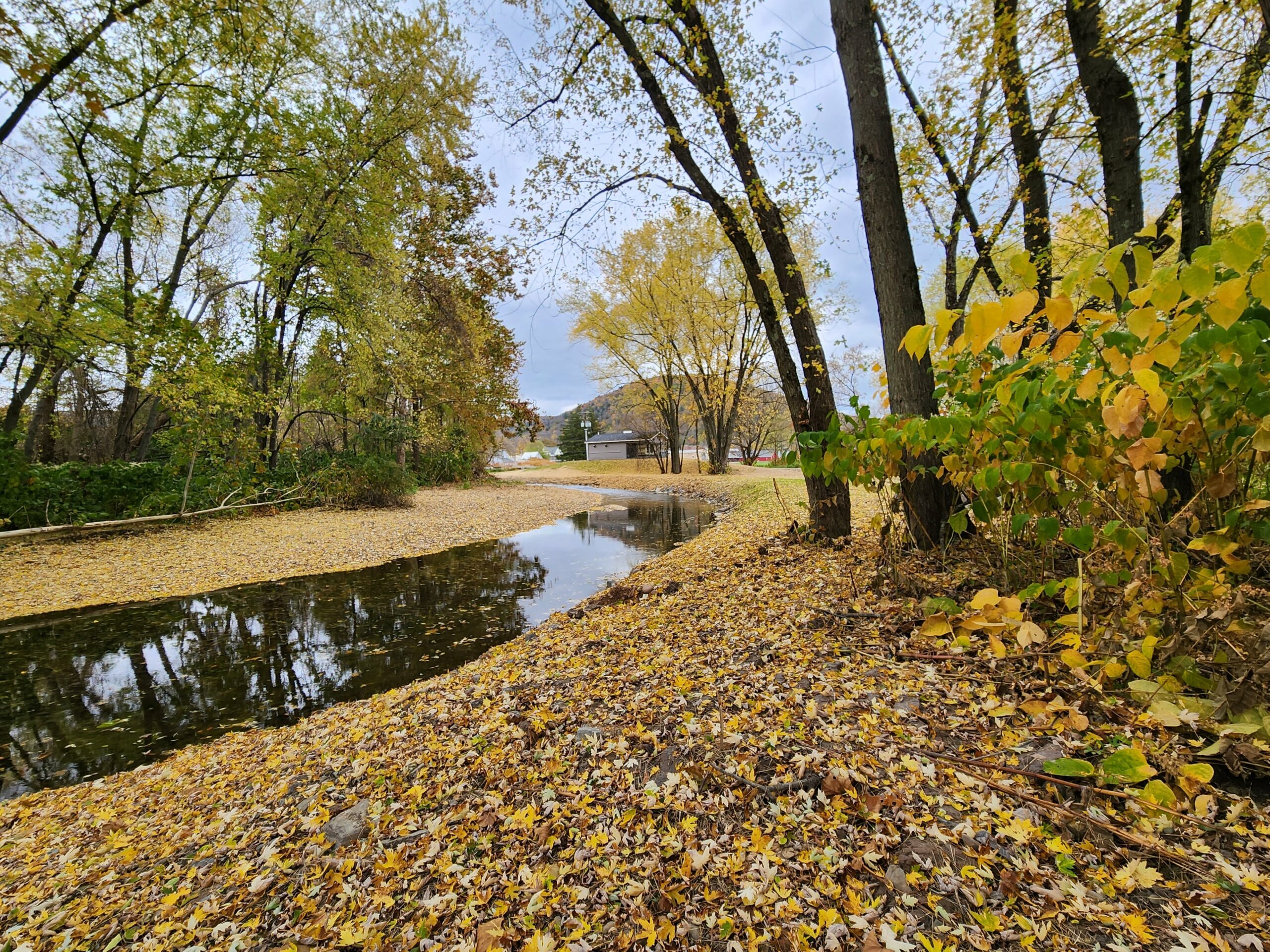
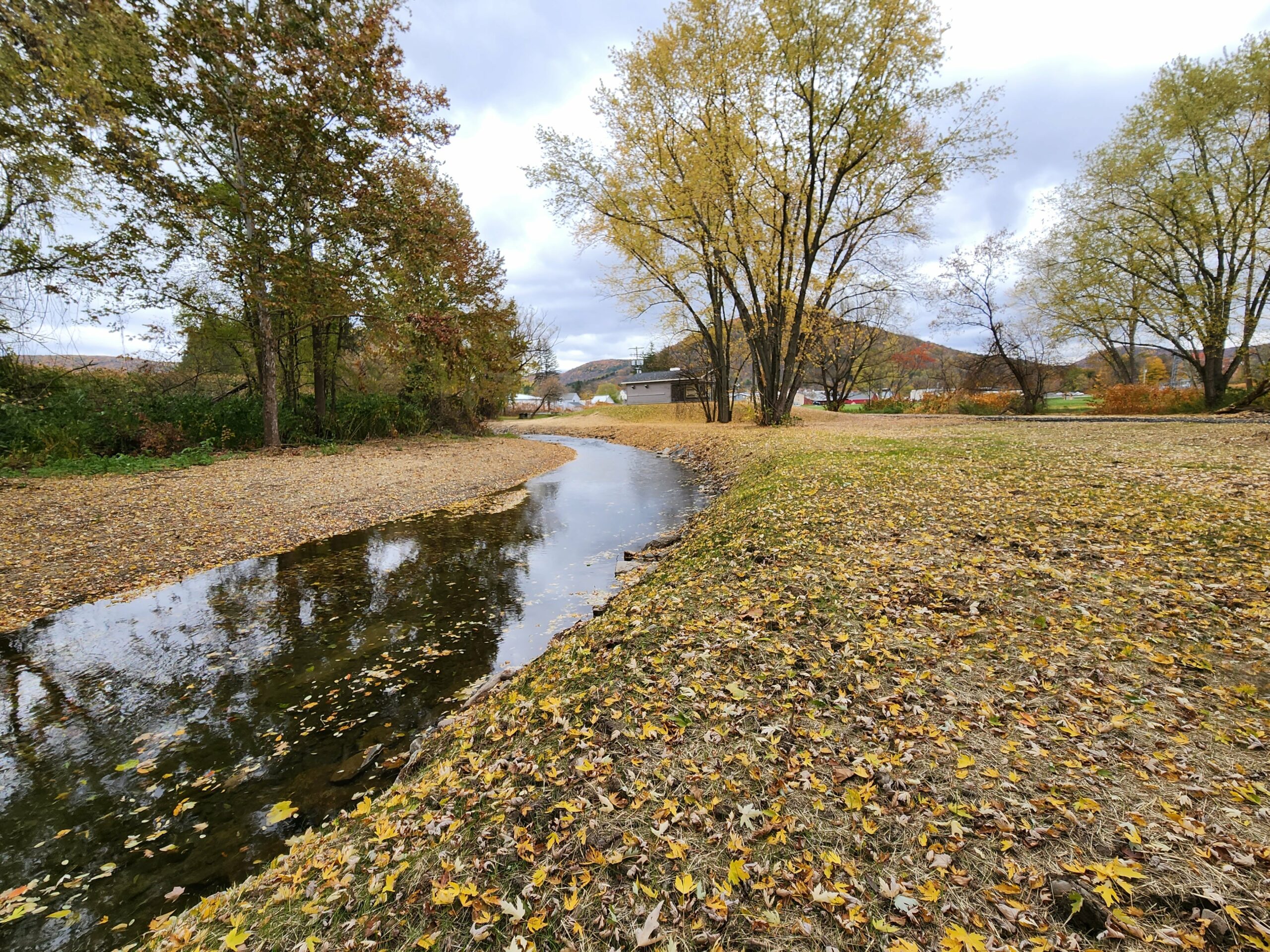
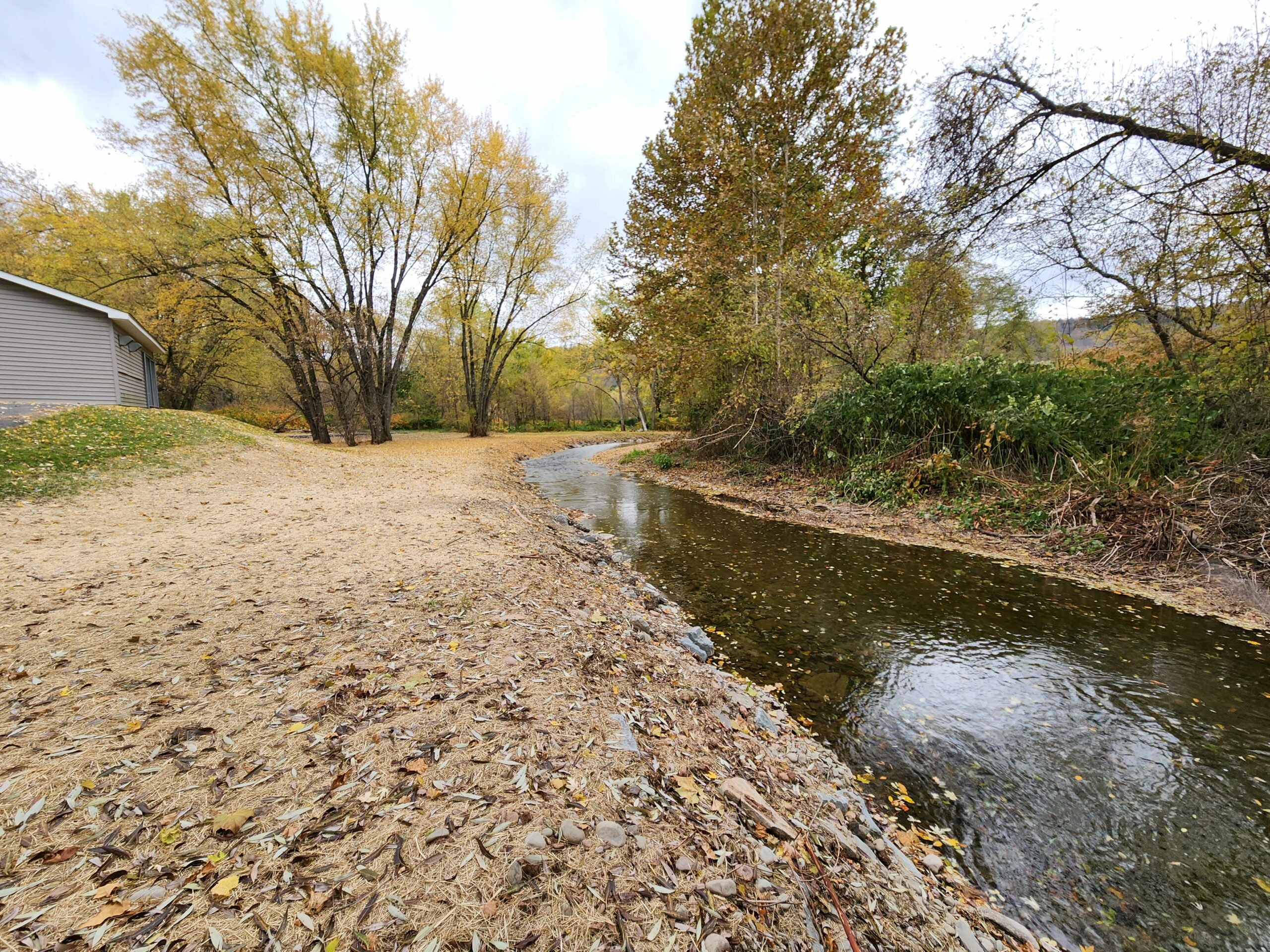
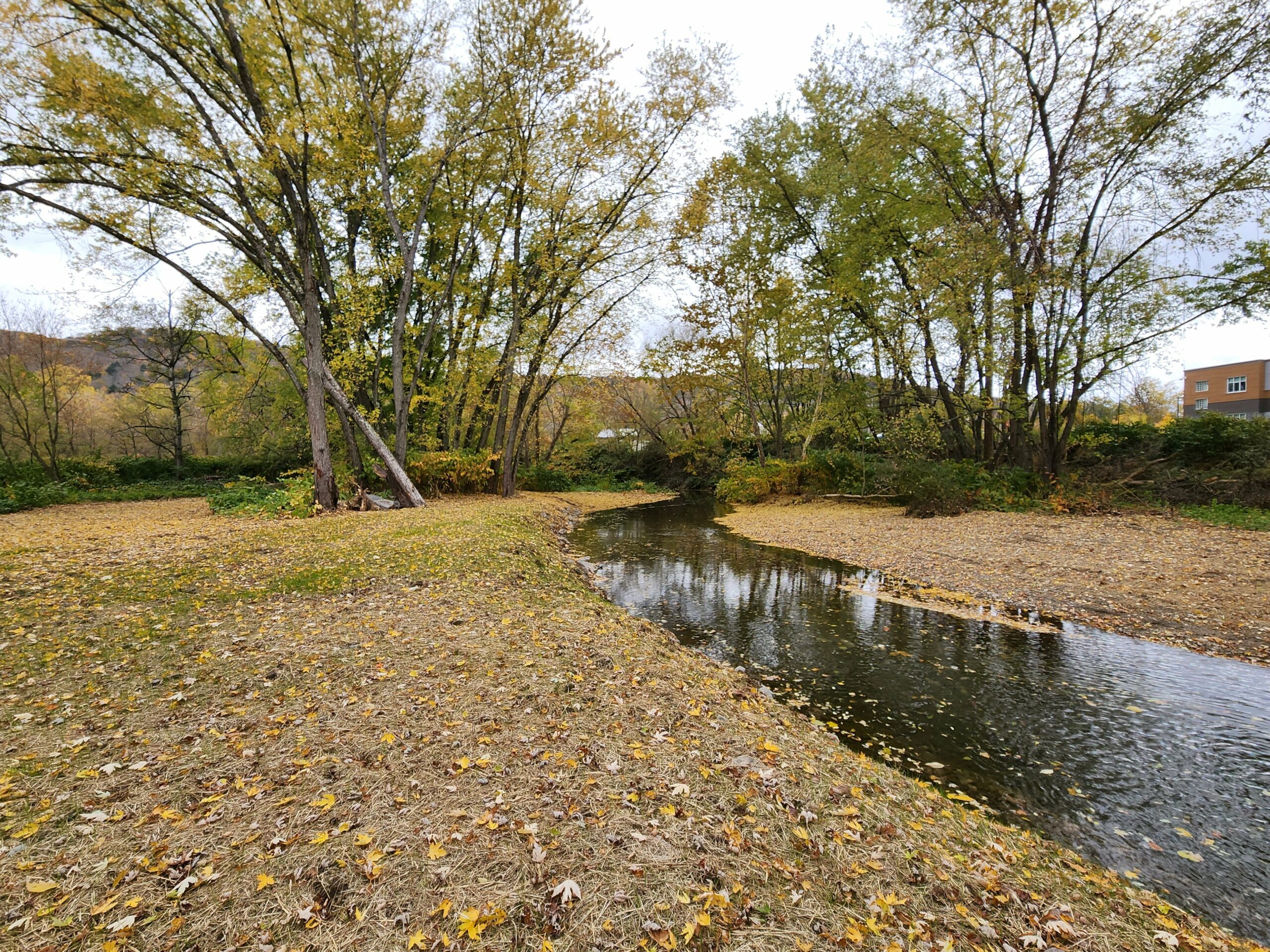
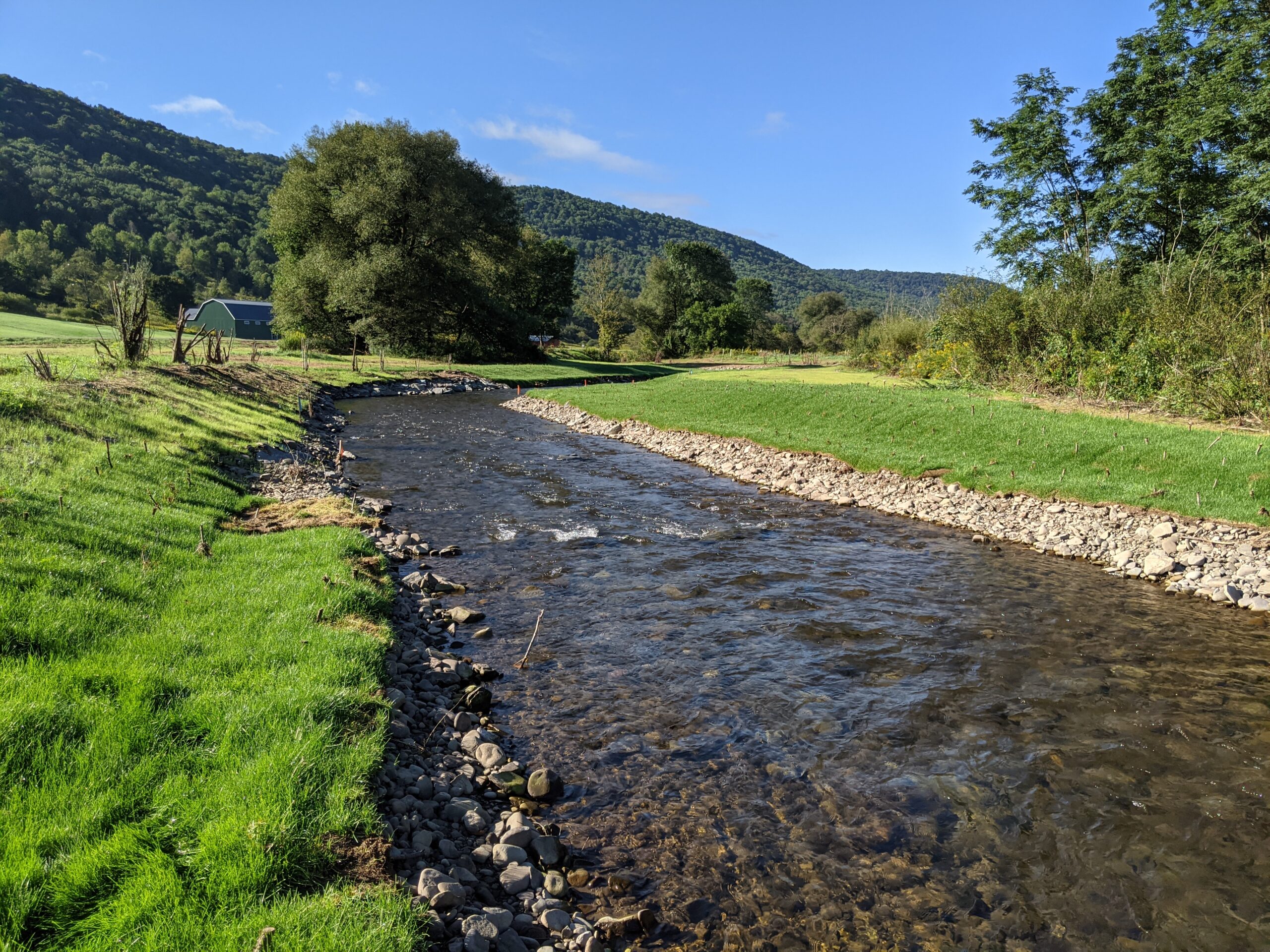
The purpose of the project is to stabilize the streambank for the property to qualify for the federal Conservation Reserve Enhancement Program (CREP) and the NYC DEP funded Catskill Stream Buffer Initiative (CSBI) on fallow agricultural riparian properties.
The CREP/CSBI pilot program was developed in 2017 by the DCSWCD, the Watershed Agricultural Council, and the NYC Dept. of Environmental Protection. The pilot program was created to merge the federal CREP and the NYC DEP funded CSBI on fallow agricultural riparian properties in Delaware County. CREP/CSBI has planted native vegetation along both the top right and top left banks of East Brook in numerous locations along the East Brook property; however, in order to complete the plantings, the streambank must be restored to a stable reach. The project included stream channel sizing, dimensioning and realignment for 740 linear feet with hardened rock toe on left and right banks near pool locations; 8 grade control structures, 1 hardened riffle, installation of sod mats and willow live stakes. Floodplain bench and multi-stage channel will provide floodplain connection while improving flood-flow and sediment conveyance.
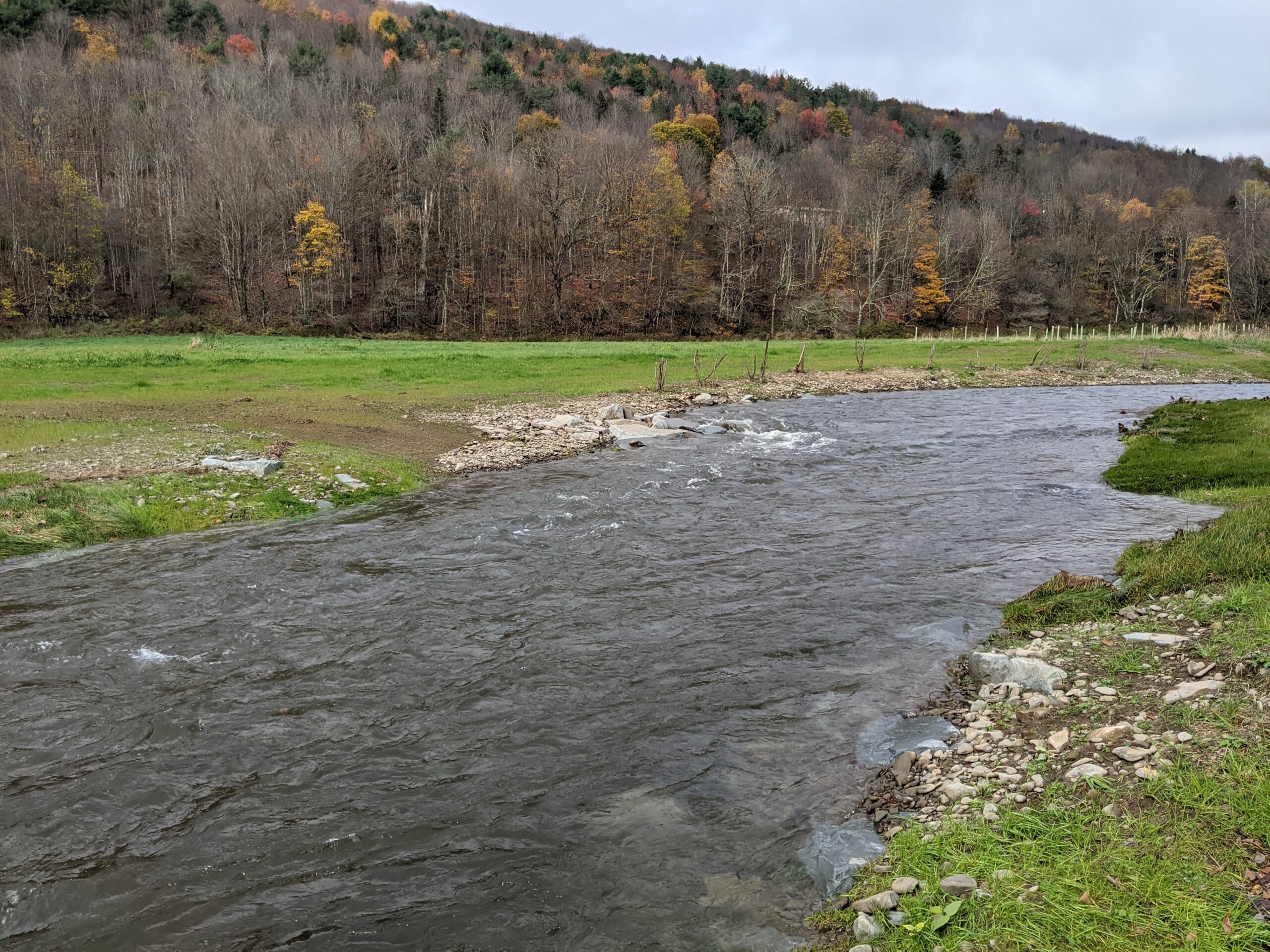
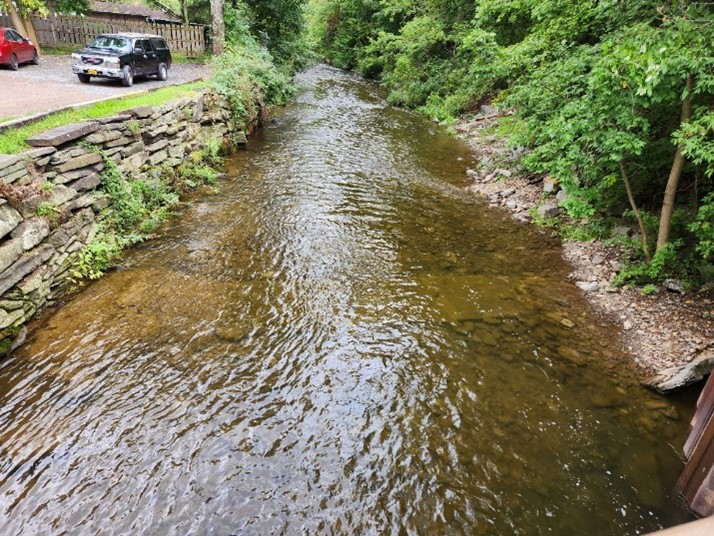
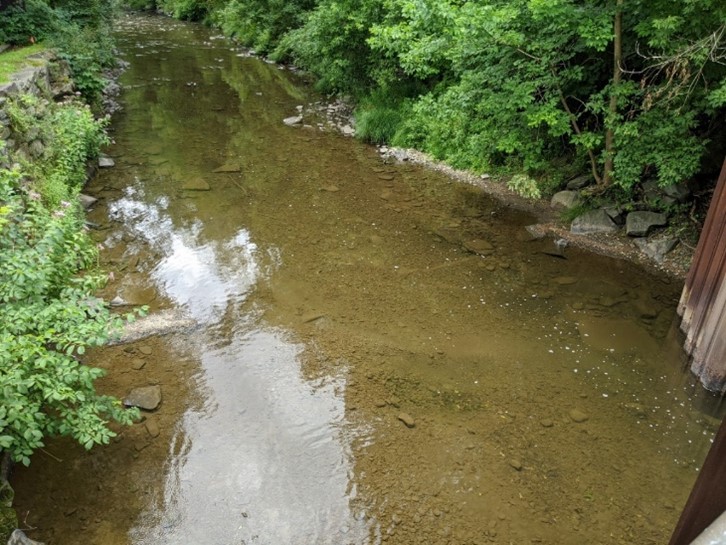
The purpose of the project will maintain water quality and protect public health by ensuring the water line is safeguarded from future storm damage.
The Village of Walton owns numerous underground utilities that cross three major tributaries of the West Branch Delaware River within the Village limits. At thirteen known locations, the utilities – water, sewer, or both, in close proximity – are threatened by the three tributaries’ continued streambed scour. Previous storm events, including most recently in 2006, resulted in damage to five of the thirteen crossing locations, leading to costly utility repairs, temporary lack of potable water for Village residents, and raw sewage leaks. At Site #6, an active sanitary sewer line is exposed with the original concrete encasement partially corroded. There is also an active water main adjacent to the sewer line; this utility is currently buried beneath West Brook. The project included the encasement of the utilities in concrete and the installation for grade control structures above and below the utilities. The grade control structures will prevent scour and head-cuts from exposing the sides/bottom of the utility encasement.
The purpose of the project will maintain water quality and protect public health by ensuring the water line is safeguarded from future storm damage.
The Village of Walton owns numerous underground utilities that cross three major tributaries of the West Branch Delaware River within the Village limits. At thirteen known locations, the utilities – water, sewer, or both, in close proximity – are threatened by the three tributaries’ continued streambed scour. Previous storm events, including most recently in 2006, resulted in damage to five of the thirteen crossing locations, leading to costly utility repairs, temporary lack of potable water for Village residents, and raw sewage leaks. The sewage leaks contaminated the West Branch and the Cannonsville Reservoir downstream, one of New York City’s unfiltered drinking water supply sources. The project included two (2) grade control structures upstream and downstream of the buried water line to prevent scour in this vicinity. The abandoned water line was cut, capped, and removed from West Brook.
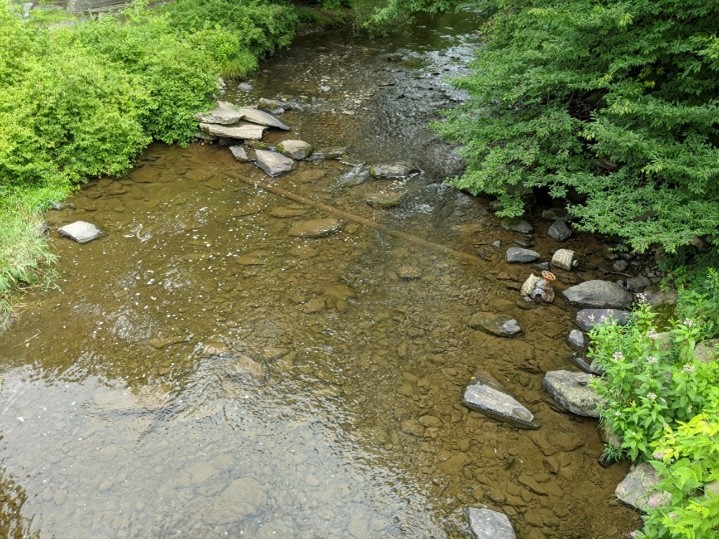
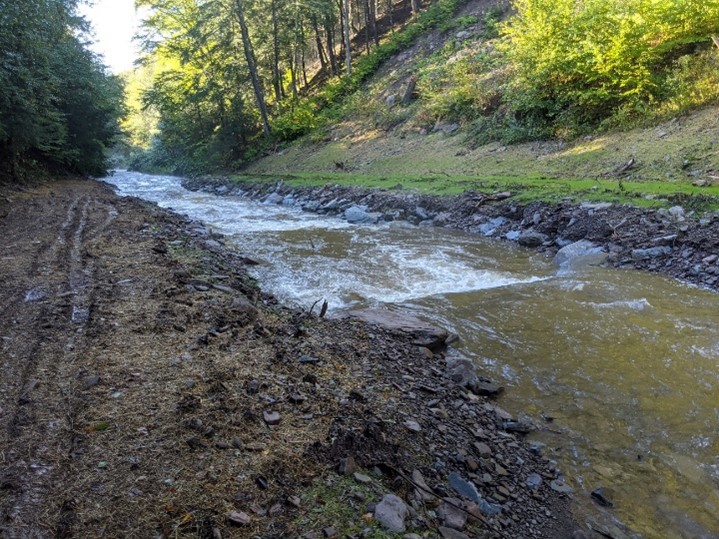
The purpose of the project was to repair the streambank along old access road for future projects.
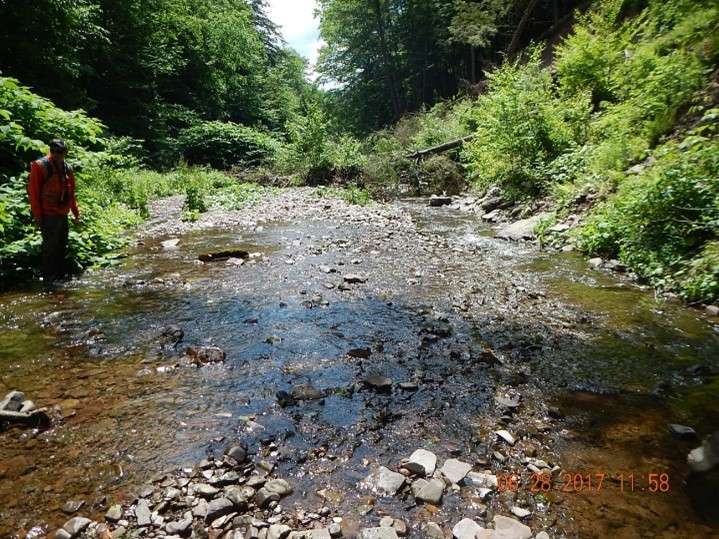
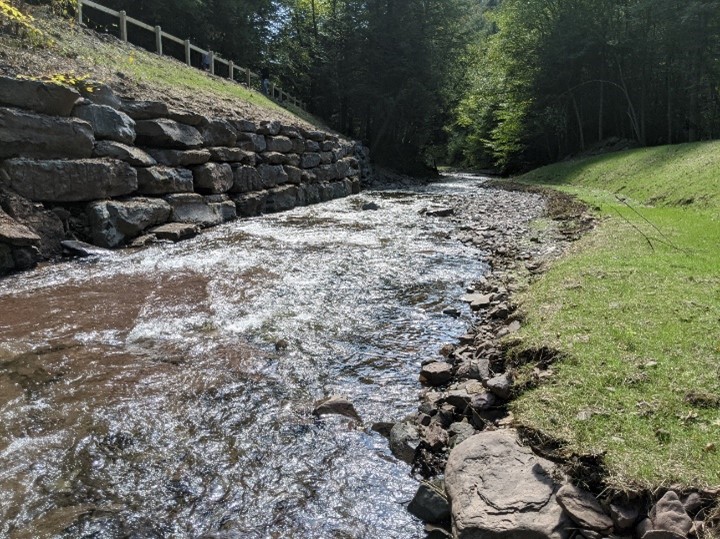
The purpose of the project is to repair streambank along old access road for future projects.
This project was a recommendation in the Village of Delhi Local Flood Analysis Plan. The purpose of this project was to reduce lateral stream migration of Steele Brook and the resultant sediment loading from streambank erosion within the project reach. The repair of stream channel sizing, dimensioning and realignment for 460 linear feet with stacked rock wall along the left streambank; floodplain bench; and re-vegetation of the eroding bank. Restore access route at the top of the slope; culvert replacement at two (2) stream crossings along route; and culvert replacement at three (3) drainage locations along access route. Tree removal of approximately 82 trees flagged within a 0.51 mile length of Steele Brook. These trees were identified during the 2017 Steele Brook Stream Feature Inventory as posing a significant flood threat to the Village of Delhi. Mobilization of this debris and transport downstream would lead to potential blockage of the undersized bridge within the Village.
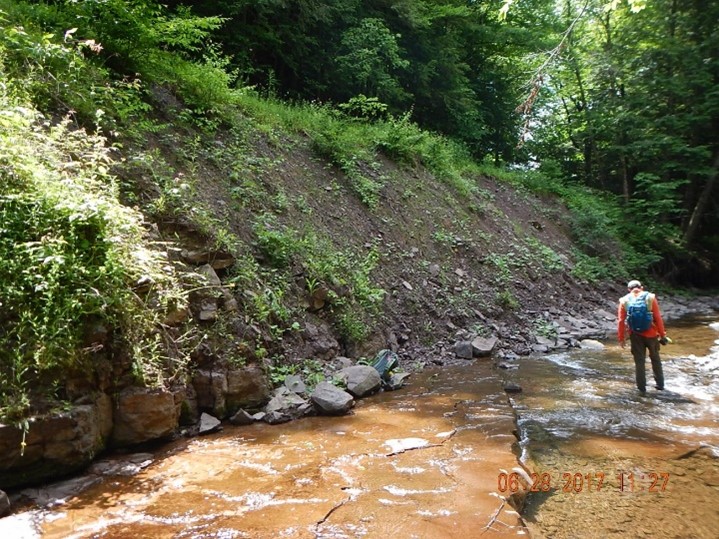
The purpose of the project is to provide public access to the West Branch Delaware River for water-based recreation.
Previously, the SCMP has designed and managed construction on two recreational boat launches upstream in the Town of Hamden and the Town of Walton. The successful completion of these boat launches has provided local residents and visiting tourists with public access to the West Branch Delaware River, and has made it considerably easier for water-based recreation (canoeing, kayaking, tubing, fishing, etc.) along the West Branch.
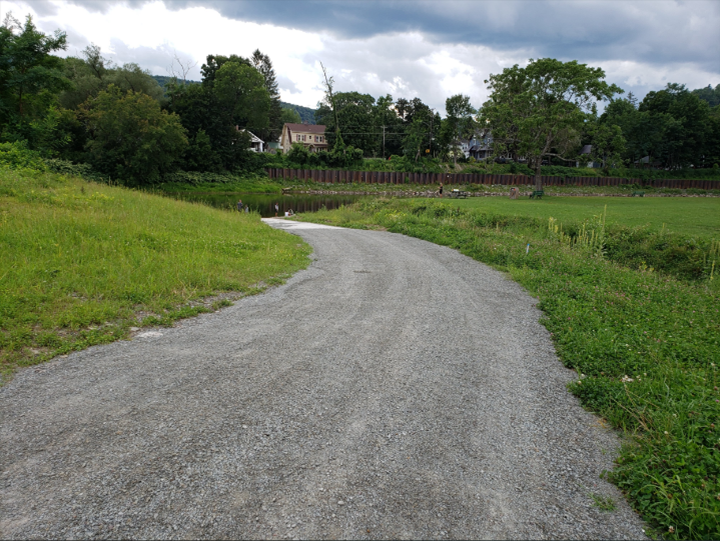
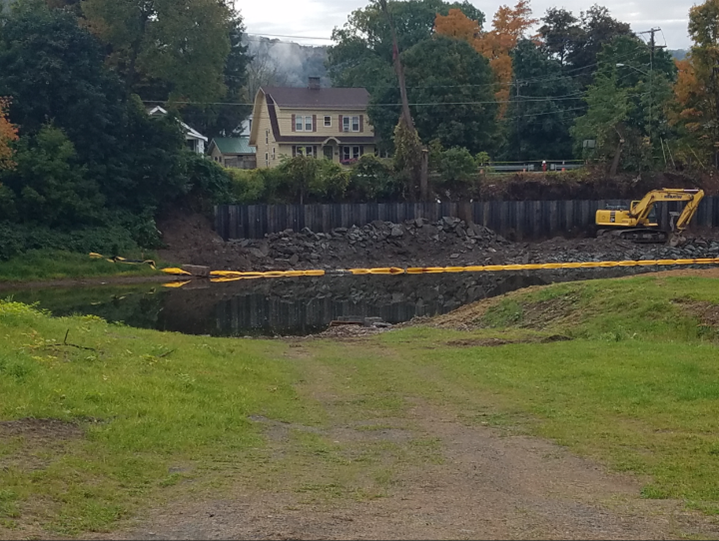
By establishing a Village of Walton ADA-compliant boat launch with an ADA-compliant access route to the boat launch, the West Branch has been provided with public recreational opportunities and filled the current boat launch gap within the Village. The project included a concrete ramp into the West Branch Delaware River and a gravel pathway to connect ramp to the already established parking area.
Click image or text below image to open project websites.
The Delaware County Soil and Water Conservation District’s Stream Management Program is dedicated to restoring and stabilizing streams and reducing nonpoint source pollution to ensure quality drinking water, and providing education and outreach on all phases of stream management and stewardship to help stakeholders make informed science-based management decisions.